
By Gerald Bratley MCIEx
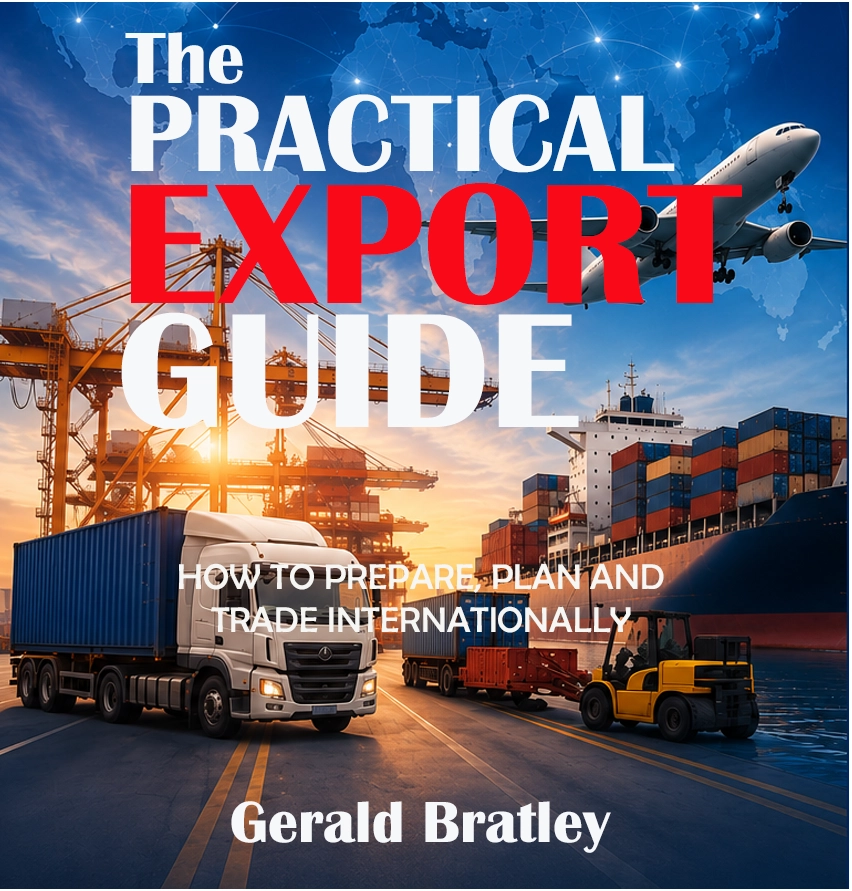
How to Prepare, Plan and Trade Internationally
The Practical Export Guide is written for businesses, entrepreneurs and individuals preparing to research, plan and trade internationally.
Exporting can appear complicated from the outside. It involves market research, pricing, documentation, transport, customs, payment terms, risk, compliance and cultural understanding. Yet in practice it can be far less intimidating once the basic processes are understood and approached in the right order.
This guide is designed to cut through the jargon and explain what needs to be done before a business enters an overseas market. It does not pretend that every task must be carried out personally. A sensible exporter needs to know which skills should be built in-house, which services can be bought in from freight forwarders, customs agents, banks, insurers, consultants or other specialists, and how to judge whether outside advice is genuinely useful.
There are many advisers and consultants offering support to exporters, and some provide excellent specialist knowledge. However, consultancy fees can quickly eat into the profitability of a transaction. A business that understands the fundamentals is better placed to ask the right questions, control costs, avoid unnecessary advice and retain ownership of its export strategy.
The book covers the practical steps required to prepare for international trade, including market selection, export planning, tariff classification, pricing, documentation, transport, payment, risk management and the procedures required to trade successfully across borders.
It is intended as a practical working guide rather than a theoretical textbook. Drawing on Gerald Bratley’s six decades in international trade, it reflects the realities of exporting as it is actually carried out: identifying opportunity, assessing risk, choosing reliable partners, understanding overseas customers and ensuring that goods, documents and payment all move as they should.
The central message is simple: exporting rewards preparation. A business does not need to know everything before it begins, but it does need to understand enough to plan properly, recognise risk and avoid handing control of the whole process to others.
Published in Kindle and paperback editions on 18 July 2026.
Book Details
- Kindle ASIN : B0H9CSYN93
- Paperback ISBN: 9798187835997
- Accessibility : Learn more
- Publication date : 18 July 2026
- Language : English
- File size : 1.1 MB
- Screen Reader : Supported
- Enhanced typesetting : Enabled
- X-Ray : Not Enabled
- Word Wise : Enabled
- Print length : 213 pages
- Page Flip : Enabled
Related Reading
- Explore all books by Gerald Bratley.
- Read more about Gerald Bratley.
- Read the article: Lessons from Sixty Years in Export.
- Read the article: Finding the Right Export Adviser or Consultant.
- Read the article: What Western Businesses Often Misunderstand About Asia.
- Explore articles in the same category: International Trade and Exporting