
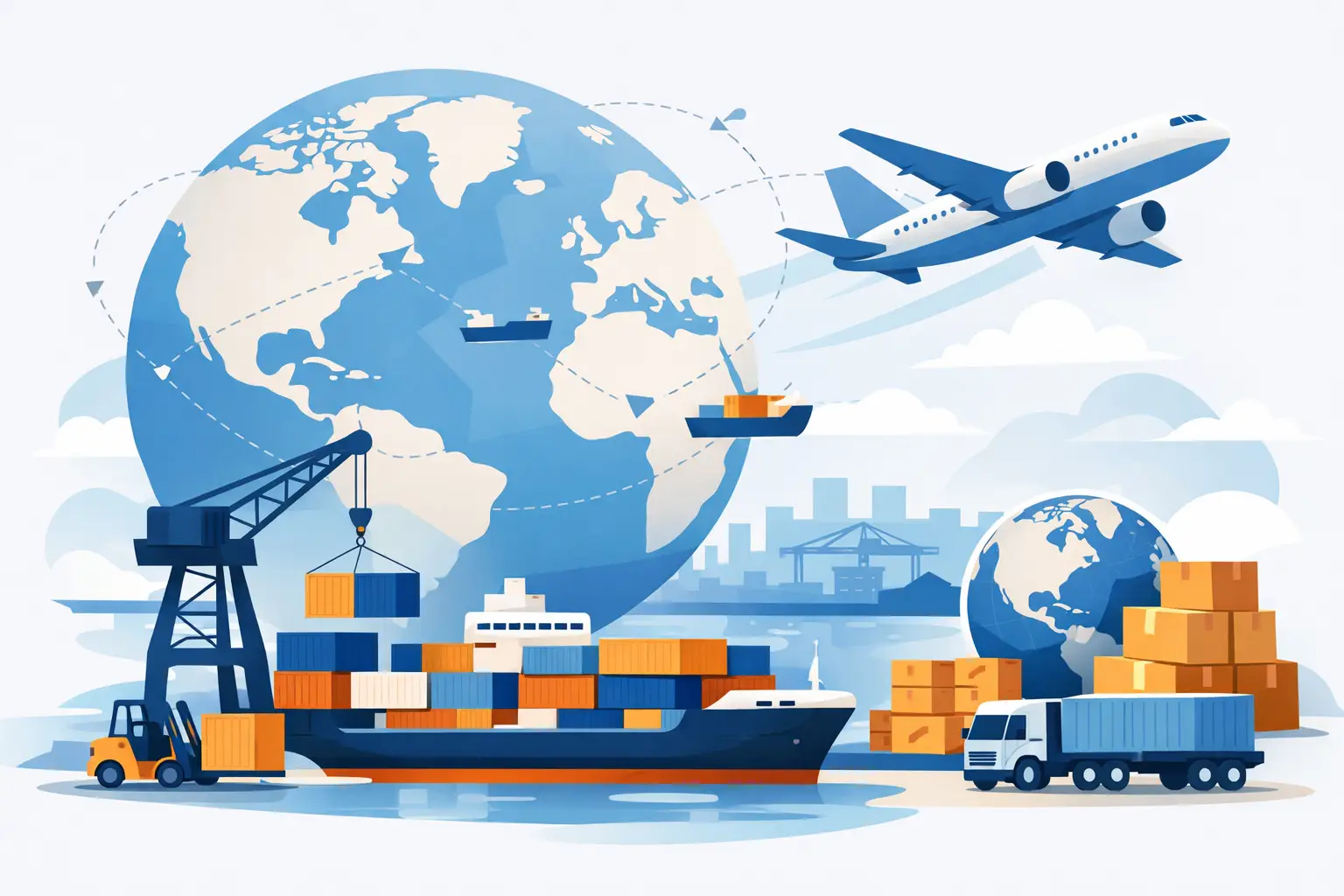
Ask ten people what is foreign trade export, and several will give a loose answer about selling goods abroad. That is not wrong, but it is incomplete. Exporting is not merely putting products on a ship and sending an invoice. It is the organised sale of goods or services from one country to a customer in another, carried out within a framework of contracts, customs rules, transport arrangements, payment terms, risk management and local market knowledge.
That distinction matters because many failures in export markets begin with the assumption that overseas trade is simply domestic trade with more mileage. It is not. A firm may make an excellent product in Birmingham, Bristol or Belfast, but success abroad depends on much more than product quality. It depends on understanding the commercial and legal journey from factory gate to foreign buyer.
What is foreign trade export in practical terms?
In practical terms, foreign trade export means selling beyond your own national market and completing the process lawfully and profitably. The export may be a container of engineering components, a consignment of food products, a specialist consultancy service, or software sold to a client overseas. The principle is the same. Value is created in one country and supplied to another.
The word foreign simply means that the transaction crosses national borders. Trade refers to the commercial exchange. Export identifies the outward movement from the seller’s country. In the United Kingdom, if a manufacturer sells machinery to a customer in Australia or the United States, that is an export. If a British consultant provides technical services to a client in Canada, that too may fall within the broader understanding of exporting, though services often follow somewhat different regulatory and tax rules from goods.
It sounds straightforward, and at one level it is. Yet the simplicity of the definition hides the complexity of execution. Exporting introduces distance, unfamiliar law, currency exposure, political risk, different business habits and occasionally very different expectations about quality, timing and after-sales support.
Why foreign trade export matters
Foreign trade export matters to individual firms because it widens the market. A business that depends entirely on home demand is vulnerable to local downturns, policy changes or shifts in fashion. Overseas markets can spread that risk. They can also create scale. A niche product with a modest market at home may find substantial demand internationally.
At national level, exporting earns foreign exchange, supports employment, improves industrial capability and often drives higher standards. Companies that export tend to learn quickly. They are forced to compare themselves with international competitors, adapt to customer requirements and sharpen their internal systems. Not every exporter becomes more efficient, but many do.
There is also a wider strategic point. Countries that lose the habit of making and selling things abroad often lose more than income. They lose commercial confidence, practical market intelligence and influence. Trade is not only an economic activity. It is a way in which nations remain engaged with the realities of the world beyond their own debate.
Exporting is simple in theory, demanding in practice
A great many beginners believe that the hardest part is finding a buyer. In truth, that is only the beginning. Once an order is won, the exporter must decide how the goods will be packed, insured, documented, shipped and cleared. Payment must be secured. Product specifications must match local standards. Delivery promises must be realistic.
This is where experience often separates profitable exporters from enthusiastic amateurs. A sale agreed on poor payment terms can become an expensive lesson. A shipment sent with incorrect documents can be delayed at the border. A distributor appointed in haste can damage the brand in a market that took years to enter.
The detail matters. It always has. Technology has altered speed and visibility, but it has not abolished the fundamentals.
The main elements of foreign trade export
At the heart of an export transaction are several moving parts that have to work together.
The first is the product or service itself. Some goods travel well and meet universal needs. Others require adaptation. Electrical products may need different certification. Packaging may need to change for climate, language or retail practice. Even a successful domestic product may not be immediately export-ready.
The second is the market. An exporter must know who buys, how they buy, what competitors charge and whether local representation is needed. A market may look attractive on paper and still be poor in reality if regulation is burdensome or margins are thin.
The third is the route to market. Some firms sell directly to overseas customers. Others use agents, distributors or local partners. There is no single correct model. Direct selling offers control but demands time and expertise. Distributors provide reach but reduce margin and can weaken contact with end users.
The fourth is compliance. Customs declarations, product standards, sanctions rules, export controls and tax treatment are not glamorous subjects, but ignoring them is costly. A business does not become international by enthusiasm alone.
The fifth is finance. Exporting ties up working capital. Goods may be in transit for weeks. Payment may be delayed. Exchange rates may move against the seller. The best export order in the world can still harm cash flow if badly structured.
Payment and risk
Payment terms deserve particular attention. Cash in advance is safest for the exporter but often unattractive to the buyer. Open account terms may help win business but expose the seller to late payment or default. Between those two lie methods such as documentary collections and letters of credit, each with advantages and administrative demands.
There is no perfect answer. Much depends on the value of the goods, the country involved, the strength of the commercial relationship and the bargaining power of each side.
Logistics and documentation
Goods do not move internationally on goodwill. They move on documents, scheduling and precise instructions. Commercial invoices, packing lists, transport documents, certificates of origin and customs entries must all be correct. If they are not, delays and extra charges follow quickly.
This is one reason seasoned exporters tend to be methodical people. They understand that small clerical errors can have large commercial consequences.
Common misunderstandings about exporting
One misunderstanding is that exporting is only for large companies. In fact, smaller firms can do very well if they offer specialised products, reliable service and sensible market selection. Size helps, but clarity and discipline matter more.
Another is that exporting is automatically profitable. It is not. Additional transport, compliance, credit and travel costs can erode margin. Some export orders flatter turnover while disappointing the bottom line.
A third misunderstanding is that English alone will carry the exporter through. In some markets it may be enough for basic business. In others it is plainly insufficient. Language is not only a tool of translation. It is a sign of seriousness and respect.
There is also a persistent belief that once an overseas agent is appointed, the job is done. Usually the opposite is true. Good agents and distributors require support, training, regular visits and close management. Neglect abroad is quickly noticed.
What is foreign trade export for a beginner?
For a beginner, the best answer to what is foreign trade export is this: it is a disciplined way of selling internationally that rewards preparation more than optimism. The beginner should not be frightened by that. Exporting is entirely learnable. But it should be approached with sober expectations.
Start with markets that are understandable, not merely fashionable. Check whether the product genuinely meets local needs. Work out the full landed cost, not just the ex-works price. Decide how payment will be protected. Make sure somebody in the business owns the process from quotation to collection of funds.
That may sound cautious, but caution is not timidity. It is professionalism. Many companies have come unstuck abroad because they confused movement with progress.
The human side of export trade
Foreign trade export is often described in terms of systems and regulations, yet it remains deeply human. Trust still matters. So does reputation. Buyers want confidence that the supplier will answer the telephone, honour the specification and deal fairly when something goes wrong.
After years in international business, one lesson remains constant: markets differ, but reliability is understood everywhere. People may negotiate differently in Manchester, Melbourne or Milwaukee, but they all remember whether you delivered as promised.
That is why export success tends to come to firms that combine patience with competence. They do not assume every market will behave like their own. They listen before they lecture. They keep records, confirm agreements and avoid the lazy habit of treating overseas customers as an afterthought.
Foreign trade export, then, is not a mystery term from economics textbooks. It is the practical business of reaching customers beyond your own borders and serving them properly under conditions that are often more demanding than at home. For companies willing to learn, it remains one of the most serious and worthwhile ways to build durable business in a world that is still, for all its noise, held together by trade.
1 thought on “What Is Foreign Trade Export?”
Comments are closed.