
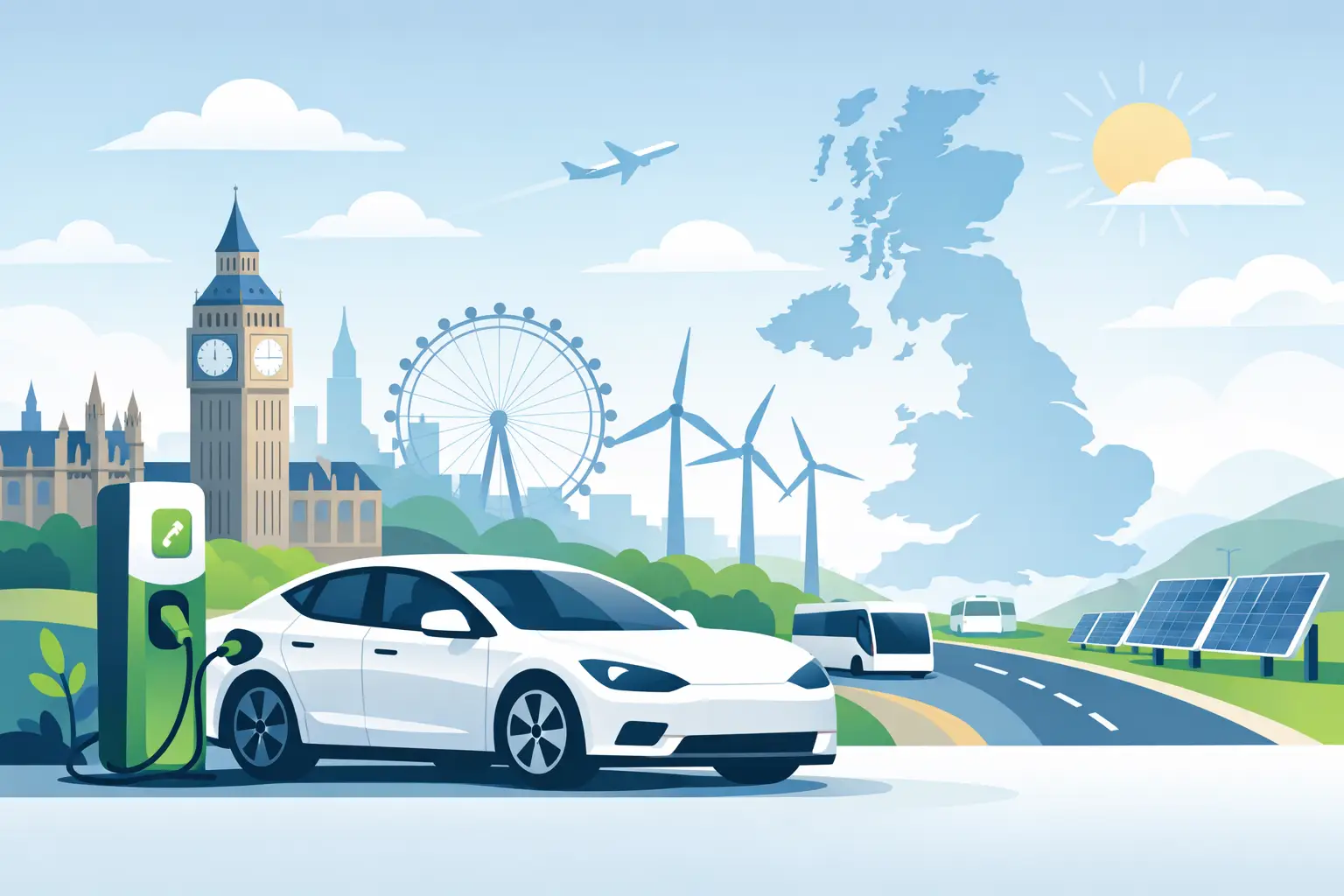
A change of vehicle has always been a practical decision: does it do the job, can it be maintained, and what will it cost over its working life? The guide to electric vehicle transition is too often presented as a moral test or a simple retail choice. It is neither. For households, businesses and government alike, it is a substantial alteration to the way transport is purchased, fuelled, serviced and planned.
The case for reducing reliance on petrol and diesel is strong. Road transport remains a significant source of carbon emissions and urban air pollution. Electric motors are efficient, quiet and mechanically simpler than internal-combustion engines. Yet a sensible transition cannot rest on slogans about a fully electric future. It must account for journeys, charging access, vehicle weight, electricity supply, industrial capacity and the uneven circumstances of people who depend on their vehicles for work.
A guide to electric vehicle transition starts with the journey
The useful question is not whether electric vehicles are generally good or bad. It is whether a particular vehicle, used in a particular way, is suited to battery power now.
For many drivers with off-street parking, modest daily mileage and a predictable routine, the answer is plainly yes. A home charge overnight is convenient, and the vehicle begins most mornings with more than enough range for ordinary travel. In that setting, the electric car removes the weekly visit to the filling station and can offer lower running costs.
The position is less straightforward for the flat-dweller reliant on public charging, the rural driver covering long distances in winter, or the tradesman carrying tools and towing equipment. Public chargers are improving, but availability, reliability, tariffs and payment arrangements still vary too widely. A charging network is not merely a collection of plugs on a map. It is a service that must work in poor weather, at busy times and when a driver has little spare time.
Range figures deserve the same caution as official fuel-consumption figures once did. They are useful for comparison, not a guarantee of everyday performance. Cold weather, motorway speeds, hills, a full load, heating and towing all reduce range. This does not disqualify electric vehicles, but it does make honest assessment preferable to optimistic assumptions.
Cost is more than the showroom price
Electric vehicles can cost more to buy than a comparable petrol or diesel model, although the gap has narrowed in some classes. This is why buyers should consider whole-life cost rather than the list price alone. Electricity bought at home is commonly cheaper per mile than petrol or diesel, and an electric vehicle has fewer moving parts requiring routine attention. There is no exhaust system, engine oil or conventional gearbox to maintain.
However, these savings are not shared equally. Charging at rapid public units can be expensive, particularly where the operator applies a premium for convenience. Insurance costs can also be higher for some models, while repair arrangements remain uneven. A minor collision involving battery protection or sophisticated sensors may produce a large bill if parts, trained technicians or suitable facilities are scarce.
For a business operating a fleet, the calculation should include vehicle downtime, depot electrical upgrades, driver behaviour and route planning. A van that returns to base every evening is a very different proposition from one travelling unpredictable distances across the country. The right decision may be to electrify cars and local delivery vehicles first, retain other vehicles for longer, and review the result from actual operating data rather than a consultant’s spreadsheet.
Battery life is another source of unnecessary anxiety and occasional overconfidence. Batteries degrade, but usually gradually rather than suddenly. Their useful life depends on chemistry, temperature management, charging habits and use. A manufacturer warranty offers some protection, but purchasers of used electric vehicles should ask for clear evidence of battery condition, not simply accept a reassuring statement from a seller.
Charging is the real infrastructure question
Britain has become accustomed to the convenience of liquid fuel. Filling a tank takes minutes and stations are familiar. Electricity is distributed differently. The advantage is that it can be supplied where vehicles are parked, including at home and at work. The difficulty is that millions of homes do not have a driveway, while many local electricity networks were not designed for concentrated evening demand from vehicle charging.
Home charging should therefore be encouraged where it is safe and practical, but it cannot be the whole policy. Kerbside charging, well-managed public hubs, workplace provision and chargers at destinations all have a role. Local authorities need to consider the streets they actually have, rather than assume that every resident can run a cable across a pavement.
Reliability matters as much as headline numbers. A broken charger, an occupied bay or an obscure payment system can turn a routine journey into a needless frustration. The industry has sometimes treated charge-point installation as an end in itself. It is not. Maintenance, transparent pricing, clear signage and access for disabled users are part of the same obligation.
There is also a wider engineering issue. Charging demand can be managed intelligently. Most vehicles are parked for long periods, which means they need not all charge at the same moment. Time-of-use tariffs and smart charging can shift demand away from the evening peak. But this requires public trust. Drivers must remain confident that their vehicle will be ready when promised, and consumers should not be penalised because they lack a driveway or cannot choose when they charge.
The grid needs investment, not alarmism
Claims that the national grid will collapse under electric vehicles are exaggerated, but complacency would be equally unwise. The transition will increase electricity demand over time, while also changing where and when that demand occurs. Distribution networks, particularly in streets with dense housing or industrial depots, require planned reinforcement.
Britain has dealt with major changes in energy use before. What is required is competent long-term planning, predictable regulation and investment ahead of demand. A system built around intermittent political announcements and short funding windows will cost more and deliver less. Electricity generation, network capacity, charger deployment and vehicle policy must be considered together.
What buyers and operators should do now
The first step is to keep a record of real journeys for several weeks. Note daily mileage, longer journeys, parking arrangements, payload, towing and where the vehicle waits between jobs. This simple exercise often reveals whether an electric vehicle fits immediately, fits with minor changes, or is not yet the sensible choice.
Next, assess charging before ordering the vehicle. A householder should obtain a proper electrical survey rather than assume an existing supply is adequate. An employer should examine depot capacity, fire procedures, parking patterns and the likelihood of future fleet growth. For those dependent on public charging, it is worth visiting nearby facilities at different times of day and checking what they charge in practice.
Do not buy excessive range merely to soothe anxiety. Larger batteries add cost, weight and material demand. Yet nor should a buyer select the cheapest model if its winter range leaves no reasonable margin for normal use. The appropriate battery is the one that meets the regular duty cycle with room for weather, diversions and battery ageing.
Used electric vehicles deserve particular attention. They can make battery transport available to more households, provided buyers are given meaningful information about condition, charging history and remaining warranty. A healthy second-hand market is essential. Without it, electric motoring risks becoming a privilege of the new-car buyer and company-car recipient.
The transition must be fair as well as fast
The debate often concentrates on private cars, but vans, buses, taxis, lorries and rural transport may matter more to the communities and businesses that depend on them. A city resident with frequent public transport choices faces a different set of decisions from a care worker, a small exporter or a rural family whose car is a practical necessity.
Government should set clear direction while avoiding the pretence that every part of the market will change at the same speed. Stable incentives for charging and fleet investment are more valuable than repeated alterations to rules. Manufacturers, meanwhile, should concentrate on affordable, repairable vehicles rather than only large, heavy models with ever more elaborate equipment.
The electric vehicle transition will succeed when it is treated as an exercise in practical engineering and public service, not a contest between enthusiasts and sceptics. The best next step is usually the one that fits the journey, the budget and the available electricity today, while leaving room for better vehicles and better infrastructure tomorrow.