
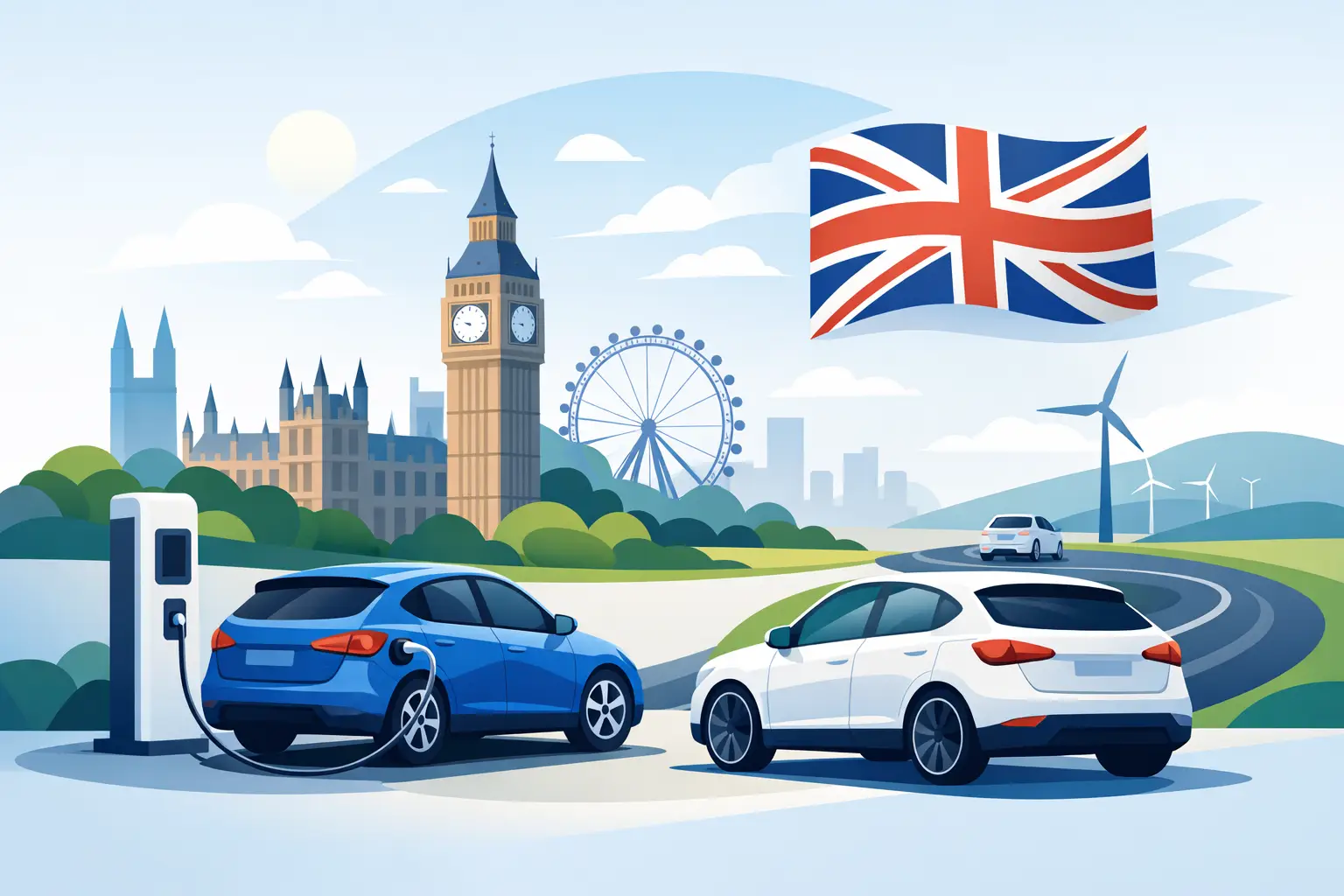
For a driver who once enjoyed Jaguars, Daimlers and six-cylinder Volvos, the appeal of a powerful petrol engine needs no explanation. It is also why the question, are electric vehicles practical in Britain, deserves a more honest answer than either evangelical enthusiasm or reflexive dismissal. The answer is yes for many people, but emphatically not for everyone.
After more than five decades of driving and 39 cars, mostly bought new, I have seen motoring move from carburettors and points to electronic management, hybrids and fully electric cars. Each change has brought gains, compromises and a good deal of exaggerated commentary. Electric motoring is no different. It should be assessed as a working tool for daily life, not as a moral badge or a political gesture.
Are electric vehicles practical in Britain for ordinary drivers?
Britain is, in one respect, particularly well suited to electric vehicles. It is a relatively compact country. Most people do not drive from Land’s End to John o’Groats every week. The average car spends much of its life sitting outside a house, on a drive, in a workplace car park or in a public car park. That period of inactivity is precisely when an electric car can be charged.
For a retired person, a family with a second car, or a commuter with off-street parking, an EV can be exceptionally practical. A typical journey to the shops, to visit family, or into town may use only a small proportion of the battery. The car returns home and is ready again the next morning. There is no weekly visit to a filling station, no petrol smell on the hands and no need to watch fuel prices rise on a roadside sign.
The experience is also agreeable. Electric cars are quiet in traffic, smooth in operation and brisk away from junctions. Their instant torque makes them feel more responsive than many drivers expect. For local driving, particularly in built-up areas, the absence of engine noise and gear changes is a real improvement rather than a novelty.
But practicality rests heavily on one unglamorous fact: where will the car be charged?
Home charging remains the dividing line
Owners with a driveway or garage have a considerable advantage. A properly installed home charger allows the car to charge overnight, usually at a lower electricity tariff than daytime rates. In this arrangement, electric motoring becomes straightforward. One no longer thinks in terms of filling up. The vehicle is simply plugged in when convenient, much as a mobile phone is charged.
Those without off-street parking face a less certain proposition. Britain has made progress with kerbside charge points, supermarket chargers and charging hubs, but provision remains uneven. A person living in a terraced street may find a public charger nearby, or may find that it is occupied, out of order or subject to an inconvenient parking limit. That is not a minor irritation. It changes the ownership experience fundamentally.
Public charging has also exposed a weakness in the early development of the market. Different operators, differing prices, unreliable equipment and awkward payment arrangements have made a simple transaction more complicated than buying petrol should be. The position is improving, and contactless payment is becoming more common, but public infrastructure still lacks the consistency motorists rightly expect.
It is therefore misleading to say that an EV suits every household equally. A driveway is not merely a convenience. At present, it is often the difference between an electric car being economical and easy to own, and being an exercise in planning.
Range is usually sufficient, until the journey matters most
Range anxiety was understandable in the earliest electric cars. It is less justified with many modern models, which can cover a substantial distance on one charge in ordinary conditions. For daily use, most drivers will never approach the limits of the battery.
The complication arises on long journeys, especially in winter. Battery range falls in cold weather, as it also does when travelling quickly, using cabin heating or carrying a heavy load. A car advertised with an impressive official range may deliver appreciably less on a wet January motorway journey. This is not a fault unique to a particular manufacturer. It is a consequence of physics and should be stated plainly.
For someone who regularly drives long distances for work, makes urgent cross-country journeys, tows a caravan, or travels to remote parts of Britain, a petrol, diesel or hybrid vehicle may still be more convenient. Motorway rapid chargers have improved greatly, but queues at busy holiday periods can occur, and not every charging stop is as quick or predictable as its publicity suggests.
That said, long-distance charging need not be an ordeal when planned sensibly. A comfort break of 25 to 40 minutes can add a useful amount of range with a suitable rapid charger. Many drivers discover that they arrive less tired when the journey includes a proper pause. The difficulty is not that long trips are impossible. It is that they require more thought than they did in a diesel saloon capable of travelling hundreds of miles before refuelling.
The cost argument needs more care
Electric cars are often described as cheap to run. This is true in some circumstances and untrue in others. Charging at home on an advantageous overnight tariff can make the cost per mile very attractive. Servicing requirements are generally lower too, since there is no exhaust system, clutch, oil change or conventional engine to maintain.
However, the purchase price of a new EV can still be high, even if the gap with petrol models has narrowed. Depreciation has also been unpredictable in parts of the market. A buyer who assumes that every electric car will hold its value well may be disappointed. As with any vehicle purchase, the model, battery size, list price and finance arrangement matter.
Public rapid charging can be considerably more expensive than home charging. If it becomes the main source of energy, much of the running-cost advantage can disappear. Insurance premiums may also be higher for some models, partly because specialist repairs and battery-related work can be costly. The sensible calculation is not simply petrol versus electricity. It is the total cost of ownership over several years.
There is a useful comparison with exporting, where apparent savings can vanish if one ignores freight, insurance, paperwork and payment risk. A headline figure is not a business case. Nor is it a motoring case.
Environmental benefit is real, but not limitless
Electric vehicles produce no exhaust emissions while being driven. In towns and cities, where air quality affects health directly, that matters. They are also quieter at low speed, which makes a noticeable difference on residential streets.
The wider environmental calculation is more complicated. Batteries require materials, manufacturing consumes energy and electricity must be generated somewhere. Yet Britain’s electricity supply has become progressively less dependent on coal, and the case for electrification strengthens as the grid becomes cleaner. An EV is not impact-free, but neither is extracting, refining, transporting and burning petrol or diesel year after year.
The more mature position is to reject both extremes. An electric car is not a magical answer to every transport problem. It is, however, a useful means of reducing local pollution and dependence on fossil fuels when it replaces a suitable conventional car and is used for many years.
Choosing the vehicle for the life you actually lead
The strongest case for an EV is made by matching it to the owner’s circumstances. Retired and no longer travelling far from home, I find an electric vehicle particularly suitable. It is quiet, comfortable, economical to charge at home and entirely adequate for the journeys I now make. That is not an ideological choice. It is horses for courses.
A salesperson, engineer or regional manager covering thousands of motorway miles every month may reach a different conclusion. So may a rural household without dependable local charging, or a family that needs one car to undertake frequent long holiday journeys with a full load. A hybrid can be a sensible transition for some. For others, keeping a well-maintained existing car for a few more years may be financially and environmentally more rational than replacing it prematurely.
The debate would be better if it concentrated less on telling people what they ought to drive and more on making good choices easier. Reliable public chargers, transparent pricing, capable local electricity networks and realistic information about range would do more for electric motoring than slogans ever will.
For drivers with home charging and predominantly local or moderate-distance travel, the electric car has already become a practical British proposition. For everyone else, the right answer remains the one that has always applied to motoring: buy the vehicle that serves your real journeys, not the journeys imagined in an advertisement.
4 thoughts on “Are Electric Vehicles Practical in Britain?”
Comments are closed.