Disciplines Involved in International Trade

Disciplines Involved in International Trade

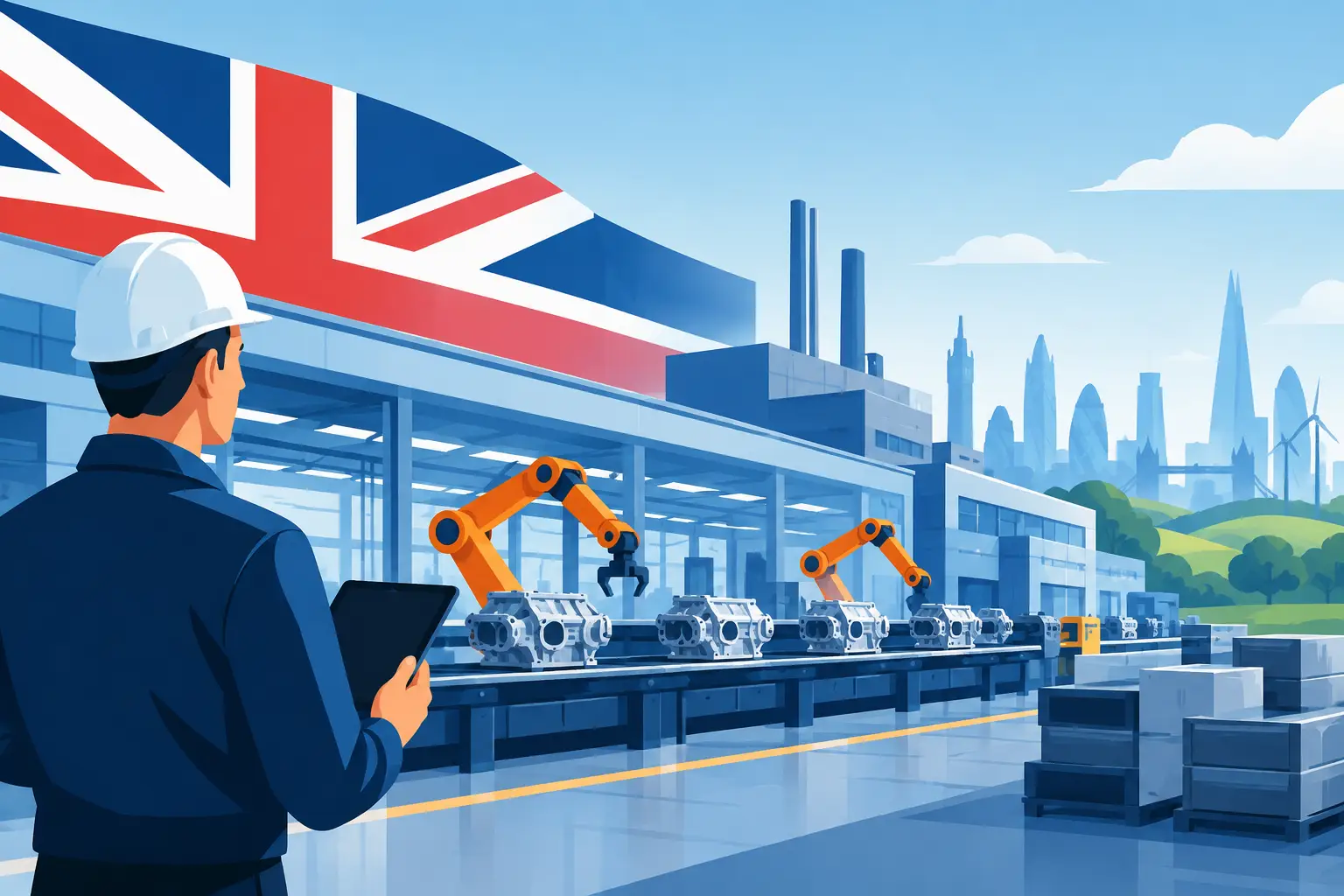
A container may leave a British port carrying perfectly good machinery, food or components, yet the exporter can still lose money long before it reaches its destination. The disciplines involved in international trade extend far beyond finding a customer and arranging transport. They determine whether the seller is paid, whether the goods clear customs, whether the contract means what both parties think it means, and whether a promising overseas relationship survives its first difficulty.

That is why international trade has never been a single profession. It is a meeting place for commercial judgement, law, banking, transport, technical knowledge and human understanding. Digital systems have altered the speed of communication, but they have not removed the underlying risks. Indeed, a quicker transaction can expose poor preparation more rapidly.

Read more

How to Preserve Workplace Knowledge Before It Goes

How to Preserve Workplace Knowledge Before It Goes

A business rarely notices how much it knows until the person who knows it has gone. A retirement, a redundancy programme, an illness or a move to another employer can expose gaps that were hidden by years of competent work. Knowing how to preserve workplace knowledge is therefore not an administrative exercise. It is a matter of protecting judgement, relationships and hard-won understanding before they disappear.

The problem is especially acute in established organisations. A long-serving engineer may know why a particular machine must be started in a certain sequence. A sales manager may understand which overseas customer needs a formal approach and which values a personal telephone call. A public-sector officer may know where a policy will meet resistance, not because a manual says so, but because they have seen the same argument arise before.

Much of this knowledge was acquired slowly, through mistakes, observation and repeated contact with people. It cannot be replaced simply by giving a successor a password, an organisation chart and a folder of procedures.

Read more

A Letter of Credit Is Only as Safe as the Bank Behind It

A Letter of Credit Is Only as Safe as the Bank Behind It

Bank risk, documentary compliance and the limits of cash against documents

A Letter of Credit is often described as one of the safest methods of payment in international trade. It can be – but only if the bank undertaking to pay is itself sound, able to transfer the currency and legally permitted to honour its obligation.

Read more

Where to Find Assistance for New Exporters

Where to Find Assistance for New Exporters

An export order can look like a triumph long before it becomes one. The enquiry arrives from a country you may never have visited, the quantities appear worthwhile, and the customer sounds keen. Yet this is precisely the point at which assistance for new exporters matters most. A poor choice of agent, an unclear delivery term or an optimistic view of payment risk can turn a promising first sale into an expensive lesson.

Over many years of working in overseas markets, I have seen British firms make both kinds of mistake. Some assumed exporting was simply domestic selling with longer distances. Others allowed the complexities to become so intimidating that they never took the first practical step. Neither approach is sensible. Exporting requires care, but it is a commercial activity, not a mysterious profession reserved for large corporations.

Read more

A Register of International Trade Experts

A Register of International Trade Experts

For many smaller firms, the difficult part of exporting is not finding a market on a screen. It is knowing whom to trust, how a particular country really conducts business, and which apparently minor detail can delay an order for months. A register of international trade experts could preserve the practical knowledge of people who have spent careers resolving such problems, then place that knowledge within reach of businesses that need it.

Britain has no shortage of retired or semi-retired people with substantial overseas experience. They have sold machinery, components, food, services and technology into demanding markets. They have appointed agents, negotiated distributorships, dealt with customs officials, arranged credit, handled complaints and learned, sometimes painfully, that a contract is only the start of a commercial relationship.

Too much of this knowledge leaves the workplace when its holder retires. It is occasionally retained by a former employer, more often lost altogether. That is a waste, particularly when many local businesses remain capable of exporting but lack the confidence, contacts or judgement to take the next step.

Read more

What an Export Readiness Assessment Reveals

What an Export Readiness Assessment Reveals

A company may have an excellent product, a sound reputation at home and a managing director eager to find overseas buyers. None of these, on their own, proves that it is equipped to export. An export readiness assessment is the discipline of testing that assumption before enthusiasm becomes expense.

For many British firms, exporting begins with an enquiry from abroad, an exhibition conversation or a distributor who appears promising. These opportunities can be valuable, but they can also encourage a business to commit too soon. The practical questions are less glamorous: can the firm quote correctly, meet the specification, obtain payment, deliver on time and support the customer when something goes wrong?

Exporting is not simply domestic selling with a longer journey. It introduces different laws, commercial customs, documentation, currencies, languages and expectations. A proper assessment exposes where the business is genuinely ready and where it is relying on hope.

Read more

The Future of Export Expertise in Britain

The Future of Export Expertise in Britain

A completed customs declaration may show that goods have left Britain. It says very little about whether an exporter understood the customer, chose a reliable agent, priced the order sensibly, protected payment, or recognised the warning signs before a promising market became an expensive mistake. The future of export expertise rests on this distinction. Trade can be digitised in many respects; judgement cannot be downloaded.

For much of the post-war period, British exporters learned through contact with factories, freight forwarders, chambers of commerce, overseas distributors and government trade officers. The work was often laborious. Information travelled slowly, overseas calls were costly, and a visit to a new market required time, preparation and a willingness to listen. Yet those conditions produced people who understood that export success was rarely secured by a brochure or a price list alone.

Read more

Upskilling, Recruitment and Export Advisers

Upskilling, Recruitment and Export Advisers

An export order rarely fails because nobody possesses a qualification. It fails because a warning was missed: the agent was unsuitable, the payment terms were unsafe, the specification was misunderstood, or a promising relationship was allowed to drift. Upskilling, recruitment and export advisers should therefore be considered together. Each concerns a different part of the same national weakness – the loss of practical judgement as experienced people leave business, public service and the professions.

Britain has long been capable of producing intelligent, well-educated people. It is less good at recognising what cannot be neatly entered on a CV or tested in a short interview. A person who has settled a dispute with an overseas distributor, visited an unreliable factory, recovered a late payment, or learned how a particular market really makes decisions possesses knowledge of a different order. It is knowledge acquired slowly, occasionally painfully, and often outside the formal systems that employers now use to assess candidates.

Read more

Why Travel Writing From Real Experience Matters

Why Travel Writing From Real Experience Matters

A hotel lobby at midnight, a missed connection, a meeting changed without warning and a cable sent home after days of silence can tell us more about a country than a polished itinerary. Travel writing from real experience begins there: not with an attractive view, but with the practical reality of being away from home, trying to understand people, institutions and a market that does not operate to British assumptions.

For much of the post-war period, overseas travel for work was neither quick nor frictionless. It involved long journeys, uncertain communications and the personal responsibility of representing a firm, or sometimes a government interest, without an office full of colleagues behind you. That experience deserves to be recorded plainly. It explains how international business was actually conducted and, equally, how travel changes the traveller.

Read more

Working Memoirs: What Work Teaches a Life

Working Memoirs: What Work Teaches a Life

A good career may look orderly when reduced to job titles, dates and achievements. The reality is usually less tidy: a lost contract, an unexpected meeting, a difficult posting abroad, a manager who took a chance, or a journey made with too little information and no easy way home. Working memoirs matter because they preserve that reality. They show how professional lives are actually built – through judgement, persistence, error and circumstance.

For readers interested in business, government, engineering or overseas trade, this is more than personal reminiscence. It is a form of practical history. Policies, markets and institutions are often described as though they operate independently of the people within them. A working memoir restores the human element: the individual trying to interpret a market, persuade a customer, manage a technical problem or represent a country under pressure.

Read more