
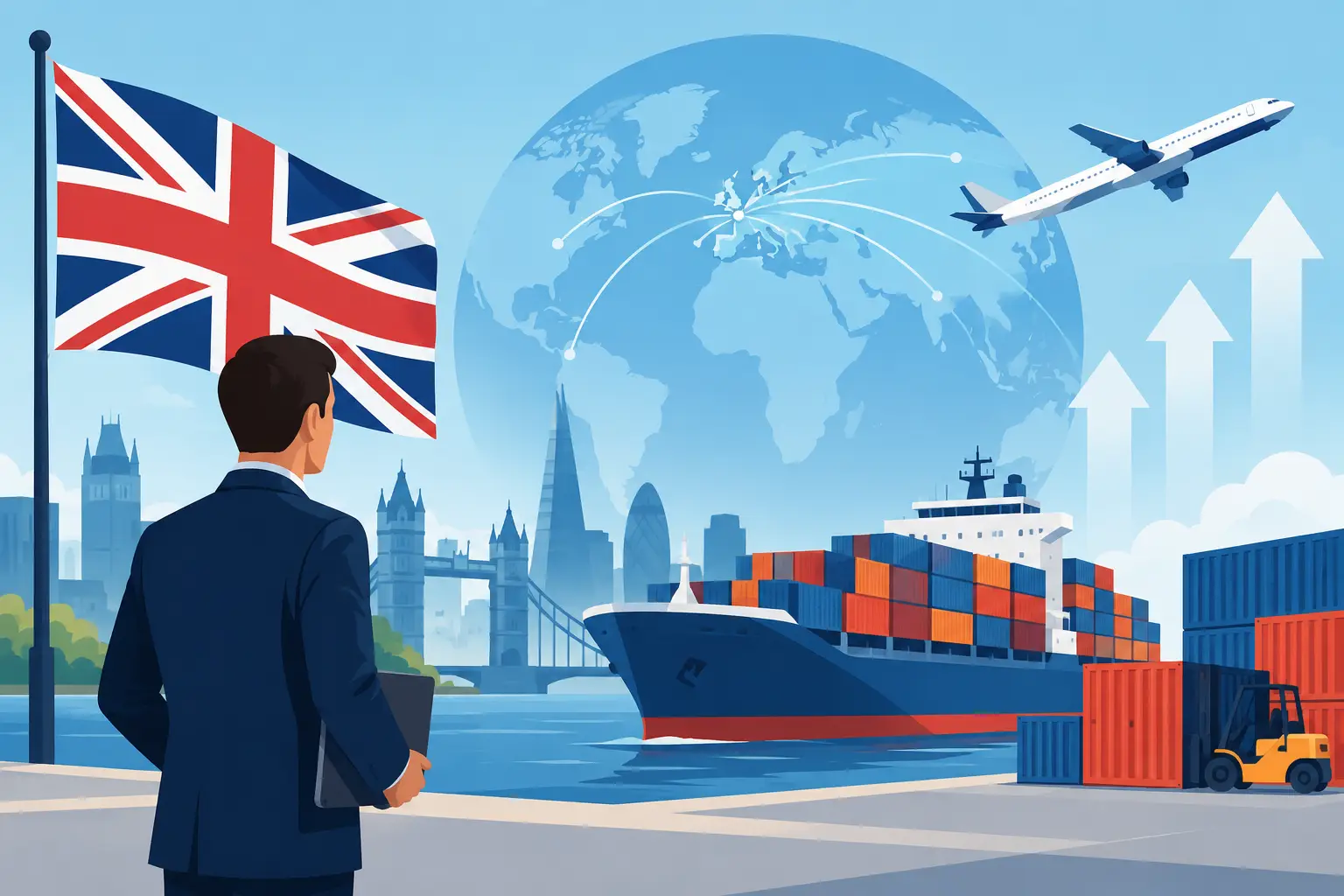
Why the next stage of Britain’s export strategy must focus on practical assistance to businesses.
Britain needs to export more. That is hardly a controversial statement. Successive governments have recognised the importance of international trade to economic growth, employment, investment and the country’s ability to pay its way in the world. Yet there is a fundamental question that deserves far more attention: are we concentrating our resources on helping businesses actually win overseas orders, or are we spending too much time teaching people about exporting?
There is an important difference.
Training has its place. Businesses need to understand customs procedures, documentation, Incoterms, payment methods and the regulations governing international trade. But knowing how to complete an export declaration is not the same as finding an overseas customer, negotiating a profitable contract and successfully delivering the goods. Export knowledge is valuable. Export business is what generates economic growth.
The Size of the Opportunity
According to government statistics, approximately 335,000 registered UK businesses exported goods or services in 2024. Around 331,000 were small or medium-sized enterprises. These are substantial numbers, but they tell only part of the story. Government research has also identified an estimated 76,000 to 95,000 businesses, with annual turnover of at least £500,000, that have never exported but believe they have products or services suitable for overseas markets, or capable of being developed for them. That represents an enormous potential opportunity. And what about the hundreds of thousands of businesses already exporting? How many are selling into only one or two overseas markets? How many could substantially increase their exports if they had access to the right expertise? The opportunity is not confined to persuading businesses to export for the first time. It also lies in helping existing exporters develop additional markets, find new customers and increase their international sales. These are the businesses on which our attention should be concentrated.
Training Is Not Export Development
Over many years, Britain has developed an extensive network of organisations offering international trade advice, training, information and support. Government departments, Chambers of Commerce, business support organisations, training providers and consultants all have roles to play. But we need to distinguish between two very different activities. The first is providing information and training about international trade. The second is helping a business develop and complete international transactions. A manufacturer considering exporting does not necessarily need another seminar explaining the advantages of overseas markets. It may need somebody who can examine its products, identify suitable countries, research potential customers, calculate competitive export prices and help negotiate the first order. An established exporter may understand the documentation perfectly well but lack the resources or experience to enter another market. In both cases, the missing ingredient may be practical commercial expertise rather than further training. We should measure export development by the business generated, not simply by the number of people attending courses or receiving advice.
Practitioners and Facilitators
International trade involves many different disciplines, and it is important to recognise the distinction between those who facilitate trade and those who carry it out. Facilitators provide valuable supporting services. They include banks, insurers, lawyers, training providers, Chambers of Commerce and government trade advisers. Their contribution is important, and successful exporting often depends upon them. Practitioners are the people directly involved in developing, managing and executing international trade transactions. They include export sales managers, market development specialists, export administrators, shipping and documentation personnel, customs specialists and freight forwarders. Freight forwarders are particularly important practitioners. They arrange and coordinate international transport, deal with carriers, manage shipping documentation and frequently undertake customs-related responsibilities. Their practical knowledge is essential to the successful movement of goods across international borders. Not every practitioner performs every function. International trade involves specialist skills, and the expertise required by one business may be entirely different from that required by another. The distinction is therefore not about the relative importance of the two groups. It is about identifying the experience needed to solve a particular business problem. A business looking for customers in South Korea needs somebody with relevant commercial market-development experience. A manufacturer struggling with documentary credits needs somebody who understands their practical operation. An exporter encountering difficulties with customs procedures or international shipping needs an experienced customs specialist or freight forwarder. General international trade experience is not sufficient evidence of competence in every discipline.
Britain Already Has the Expertise
I began working in international trade in 1967, preparing export quotations at Yorkshire Imperial Metals in Leeds. During the following decades, I established my own export business, developed international markets for British manufacturers, negotiated overseas manufacturing licences and lived and worked in Bahrain, Malaysia and South Korea. I subsequently established an Export Development Service through Barnsley Chamber of Commerce, which expanded to serve the four South Yorkshire Chambers, before being seconded into the Department of Trade and Industry as Export Promoter for South Korea. These experiences demonstrated something important. Export development is a practical activity. It requires commercial judgement, product knowledge, an understanding of international markets and the ability to manage the complete process from initial enquiry to final payment. Britain has thousands of people who have accumulated such experience during their working lives. Some remain employed in exporting companies. Others work independently as consultants. Many have retired from full-time employment but retain considerable knowledge and practical expertise. Yet there is no comprehensive national system for identifying these practitioners, verifying their particular competencies and making their services readily available to businesses that need them. That is an opportunity we should not overlook.
A Register of International Trade Experts
The proposed Register of International Trade Experts would address this problem. It would identify experienced practitioners and record the particular international trade disciplines in which they have demonstrated competence. The register would distinguish between experience in international sales, market development, contractual negotiations, export administration, documentation, payment methods, customs, logistics and other specialist activities. It would also identify geographical market experience and whether individuals were available to assist businesses. Crucially, inclusion would depend upon verification of relevant practical experience rather than membership of a professional organisation or the possession of a general qualification. A business seeking assistance could therefore be matched with somebody who had actually performed the work required. The register would not replace existing commercial service providers. It would help businesses locate the appropriate expertise and, where necessary, work alongside those providers.
An International Trade Development Service
A register of experts would be valuable, but it should form part of a wider practical service. The proposed International Trade Development Service would work through local authorities, Chambers of Commerce, Growth Hubs and other established business support networks. Its purpose would be straightforward: identify businesses capable of exporting or increasing their exports, establish what assistance they need and connect them with verified practitioners who can help them achieve measurable results. The process could begin with a practical assessment of the business. What does it manufacture or supply? Is its product suitable for overseas markets? Does it have sufficient production capacity? Is its pricing competitive? What export experience does it already possess? What is preventing it from progressing? The answers would determine the assistance required. For some businesses, the priority might be overseas market research and customer identification. For others, it might be pricing, contractual negotiations, regulatory compliance, payment security or managing the first shipment. The practitioner would work with the business to address these problems, rather than simply provide a report explaining what the business ought to do. The objective would be to turn export potential into export orders.
Measure Results, Not Activity
This brings us to another important question. How do we measure the success of government-supported export promotion? The number of businesses attending seminars, receiving information or consulting advisers may demonstrate activity, but it does not necessarily demonstrate economic results. A more meaningful assessment would examine: • How many previously non-exporting businesses secured their first overseas orders? • How many existing exporters entered additional markets? • How much additional export business was generated? • How many businesses continued exporting after receiving assistance? • What was the cost of delivering those results? Not every export development project will succeed. International markets are competitive, and some businesses will discover that their products are unsuitable or their prices uncompetitive. A successful service must be prepared to make those judgements too. But its primary purpose should remain the generation of sustainable international business.
Government’s Role
The Department for Business and Trade already recognises the importance of helping more British businesses export. The question is how its resources, and those of other publicly supported organisations, can be used most effectively. Government does not necessarily need to create another national organisation or employ an army of additional advisers. Instead, it could support a framework through which existing local business networks identify potential exporters and commission assistance from verified, experienced practitioners. The delivery could remain within the private sector, with public bodies helping to coordinate access, establish standards and evaluate outcomes. Before committing additional public expenditure, it would also be sensible to examine what is currently spent on export information, training, advice and promotion, and how much measurable additional export business those activities generate. The objective should not simply be to spend more money. It should be to make existing resources more productive.
Start Locally, Then Expand
There is no reason why such a service must begin as a large national programme. A locally delivered pilot could establish the practical arrangements, test the verification of experts, identify businesses requiring assistance and measure the resulting commercial activity. Local authorities and Chambers already have relationships with businesses in their areas. They are well placed to identify manufacturers and service providers with export potential. A successful pilot could provide a model for adoption elsewhere, with common verification standards and consistent measures of performance. The service could grow through evidence of what works, rather than through another national reorganisation of business support.
The Real Priority
Britain’s international trade future will not be determined by how many certificates are issued, how many seminars are organised or how many reports are published. It will be determined by British businesses finding customers, winning contracts, supplying goods and services and receiving payment from overseas. Training, information and advice are necessary supporting activities, but they should never become substitutes for the commercial activity they are intended to encourage. We already have a substantial exporting community. We have tens of thousands of businesses with the potential to begin exporting, and many existing exporters capable of expanding into additional markets. We also have generations of experienced international trade practitioners whose knowledge could help them. The challenge is to bring these three elements together. That is the purpose of the proposed Register of International Trade Experts and the International Trade Development Service. Rather than concentrating on teaching more businesses about exporting, we should concentrate on helping more businesses actually export. And rather than measuring how much assistance we provide, we should measure how much additional international business that assistance produces. Britain does not simply need more export advice. It needs more export orders.
Gerald Bratley MCIEx has worked in international trade since 1967, including international sales, export management, overseas market development, manufacturing licensing, Chamber of Commerce export development and a two-year secondment to the Department of Trade and Industry. Sources for the government figures
- Department for Business and Trade, Number of Exporting Registered Businesses in the UK, 2016–2024, published August 2026.
- Department for Business and Trade, National Survey of Registered Businesses 2024, Wave 9.
- HMRC, Customs Importer and Exporter Population 2025.