
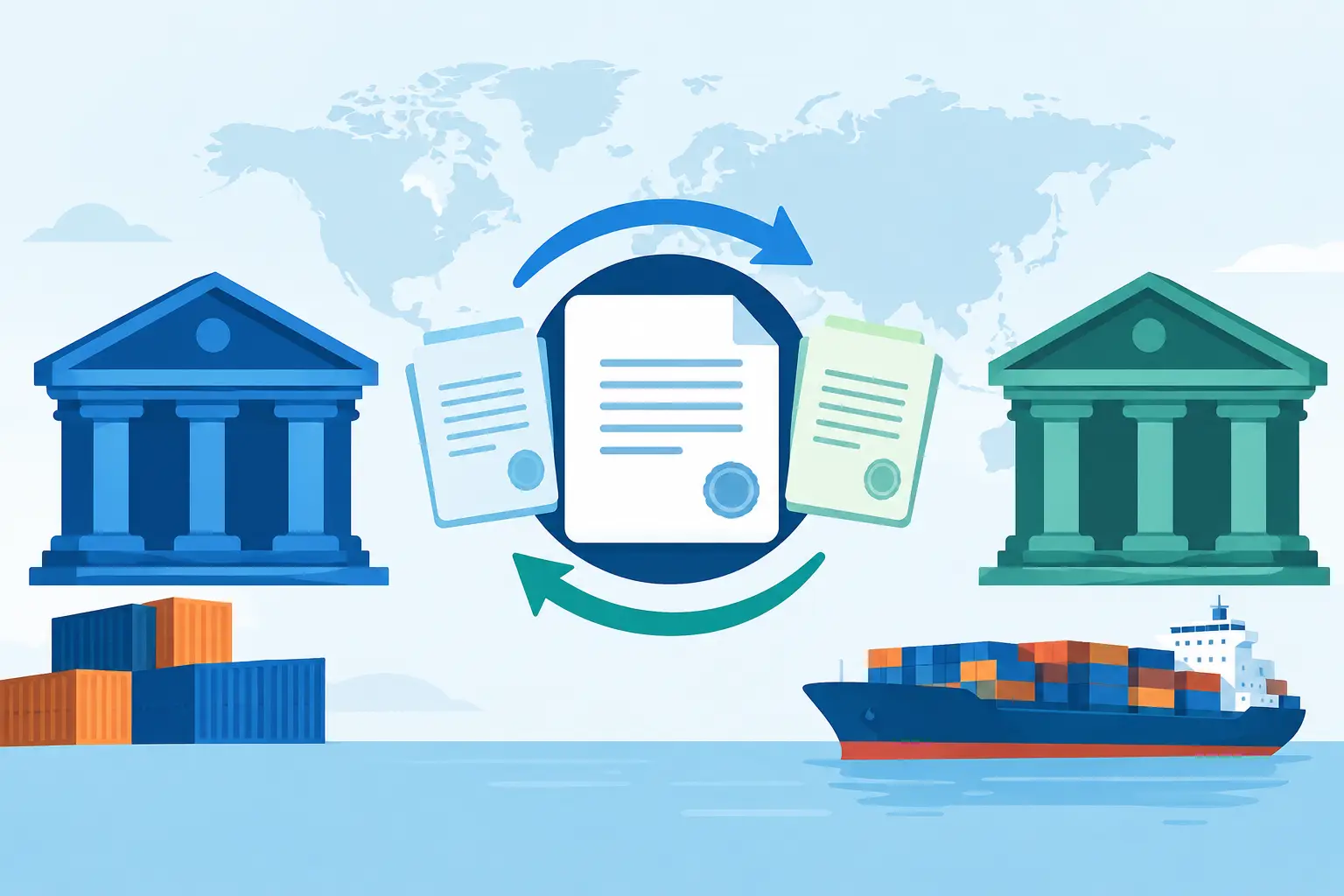
A buyer in one country wants machinery, materials or consumer goods. The supplier is elsewhere, but an intermediary has found the opportunity and does not want the buyer and supplier simply to deal directly. The question, then, is what is a back to back letter of credit? It is a banking arrangement designed for precisely this sort of transaction, though it is more demanding and less routine than the phrase may suggest.
In simple terms, an intermediary receives a letter of credit from the ultimate buyer and uses it as security to persuade a bank to issue a second letter of credit in favour of the actual supplier. There are therefore two separate credits, linked commercially but not identical in legal effect. One supports the sale to the buyer; the other supports the intermediary’s purchase from the supplier.
This device has long had a place in international trade, particularly where merchants, agents and specialist traders add genuine value through market knowledge, finance, inspection or consolidation. It is not a substitute for sound credit judgement, accurate documents or a viable contract. Indeed, it makes each of those matters more significant.
How a back to back letter of credit works
Consider a British trading company that has secured an order from an overseas buyer for industrial pumps. The buyer arranges for its bank to issue an irrevocable letter of credit in favour of the British trader. That is the first, or master, credit.
The trader does not manufacture pumps. It approaches its bank with the master credit and asks it to issue a second irrevocable letter of credit to the manufacturer. This second credit is commonly called the back-to-back credit. The bank will normally take the master credit as part of its security, but it may also require a cash margin, other collateral, or a clear record of the trader’s financial standing.
Once the manufacturer ships the pumps and presents documents complying with the second credit, it is paid or receives an undertaking to be paid, depending on the terms. The intermediary then uses the supplier’s documents, often with its own commercial invoice substituted for the supplier’s invoice, to claim under the master credit. The difference between the two invoices represents the intermediary’s margin, from which it must meet bank charges, finance costs and any operational expense.
The sequence sounds tidy on paper. In practice, timing is the difficulty. The supplier must ship early enough for documents to be obtained, checked, amended if necessary and presented under the master credit before its expiry date. A few days lost in a port, a wrongly worded certificate or an invoice that does not match the credit can put the intermediary under considerable pressure.
Why use a back to back letter of credit?
The main attraction is that the intermediary can conduct business without paying the supplier entirely from its own cash resources. It can use the buyer’s bank-supported commitment as the basis for financing its purchase. This may be valuable where the trader has specialist knowledge of a market but lacks the balance sheet of a large manufacturer.
It also preserves commercial confidentiality. The ultimate buyer need not necessarily know the source of supply, and the manufacturer may not know the final customer or the ultimate selling price. There are legitimate reasons for this. A trader may have spent years building a distribution channel, navigating local regulations and developing relationships. Its margin is payment for work that is not visible in the crate or container.
There can also be a practical reason where the goods are sourced from more than one producer. A trader may use separate arrangements to assemble a complete order, perhaps combining components, packaging or inspection services before meeting the buyer’s requirements. However, each extra layer increases documentary and financing risk.
Two credits, not one transferred credit
A back-to-back arrangement is often confused with a transferable letter of credit. They are not the same.
A transferable credit is expressly marked transferable and allows the first beneficiary to ask the transferring bank to make all or part of the credit available to another beneficiary. It remains, in essence, one credit transferred under defined rules. The original beneficiary may usually substitute its own invoice, but the process depends on the terms of the credit and the bank’s willingness to act.
A back-to-back structure involves two independently issued credits. The bank issuing the second credit undertakes its own obligation to the supplier. It will examine the supplier’s documents against the second credit, while payment under the master credit depends on documents complying with the first. The wording, amounts, shipment dates and expiry dates must therefore be managed with great care.
That distinction matters. A trader cannot assume that possession of a letter of credit entitles it to raise another one. The issuing bank of the back-to-back credit is taking a risk on the intermediary and on the transaction as a whole. It may decline the proposal, particularly where the goods are specialised, the overseas banks are unfamiliar, or the timetable leaves no room for error.
The points a trader must get right
The master credit should normally be received, authenticated and scrutinised before the intermediary makes commitments to the supplier. A credit that appears generous in value may still be unusable if it calls for documents the supplier cannot provide, has an impractical shipment period, or is issued by a bank whose undertaking the intermediary’s bank will not accept without confirmation.
The second credit must be drafted so that the supplier can perform and so that its documents can support presentation under the master credit. The intermediary will usually need a later shipment date and earlier expiry date in the second credit than in the master credit. It needs time to receive the documents, replace the supplier’s invoice where permitted, and present the full set under the first credit.
Amounts require similar discipline. The second credit is generally lower than the master credit, reflecting the intermediary’s margin. Yet the difference must cover more than anticipated profit. It needs to absorb freight variations, insurance, inspection, document handling, bank commissions, currency movements and the occasional expense that international trade invariably produces.
The goods description is another trap. The two credits do not always need identical wording, but they must be commercially compatible. If the master credit requires a particular technical certificate, packing standard or evidence of origin, the second credit must enable the supplier to produce it. A bank deals with documents, not with whether the pumps, garments or chemicals are physically satisfactory. That longstanding principle is often misunderstood by newcomers to trade.
The risks are real, and they do not disappear into the bank
A back-to-back letter of credit can ease financing, but it does not remove the intermediary’s exposure. If the supplier presents discrepant documents and the bank nevertheless pays or the intermediary accepts them, the intermediary may be left unable to draw under the master credit. If the buyer rejects documents under the first credit, the trader may still owe its bank under the second.
There is also performance risk. The supplier may ship late, send substandard goods, or fail altogether. The buyer may allege that the goods do not meet the contract, even where the documents are compliant. The letter of credit handles payment against stipulated documents; it does not settle every commercial dispute arising from the underlying sale.
Political and banking risk can intrude as well. Exchange controls, sanctions, conflict, insolvency, transport disruption and a deterioration in an issuing bank’s position can turn a straightforward transaction into a recovery exercise. Confirmation by a bank acceptable to the beneficiary may reduce one element of risk, but it has a cost and is not available in every market or for every transaction.
For this reason, banks tend to favour experienced applicants with a convincing explanation of the trade. They will want to know who the parties are, what the goods are, how they will move, why the intermediary is involved, and whether the documentary timetable is credible. A well-prepared transaction is easier to finance than one assembled hurriedly after a salesman’s promise.
When the structure is sensible
A back-to-back credit is most useful where an intermediary has a firm onward sale, a dependable supplier and a clear reason to protect its commercial position. It can suit commodities, manufactured equipment, textiles and other established trade flows. It is less attractive for speculative buying, volatile markets or complex projects where specifications are still changing.
Modern alternatives may sometimes be simpler. Open-account trading supported by credit insurance, receivables finance, escrow arrangements or direct supplier finance may better suit established relationships. The right choice depends on bargaining power, country risk, the parties’ creditworthiness and the value of keeping supplier and buyer relationships separate.
The enduring lesson is modest but valuable: a back-to-back letter of credit is a useful instrument for a real trading transaction, not a clever piece of paper that creates safety by itself. Before accepting the order, make sure the goods, documents, dates and people involved can withstand the scrutiny that international trade eventually brings.