

Britain emerged from the Second World War victorious but economically exhausted. Any useful guide to postwar British industry must begin with that uncomfortable fact. The country retained great engineering capacity, skilled labour and established overseas commercial connections, yet it also carried worn-out plant, heavy debts, rationing and an urgent need to earn foreign currency. The subsequent story is not simply one of industrial decline. It is a record of recovery, innovation, missed opportunities and difficult choices made under pressures that are easily forgotten.
Transferable and Divisible L/Cs Explained
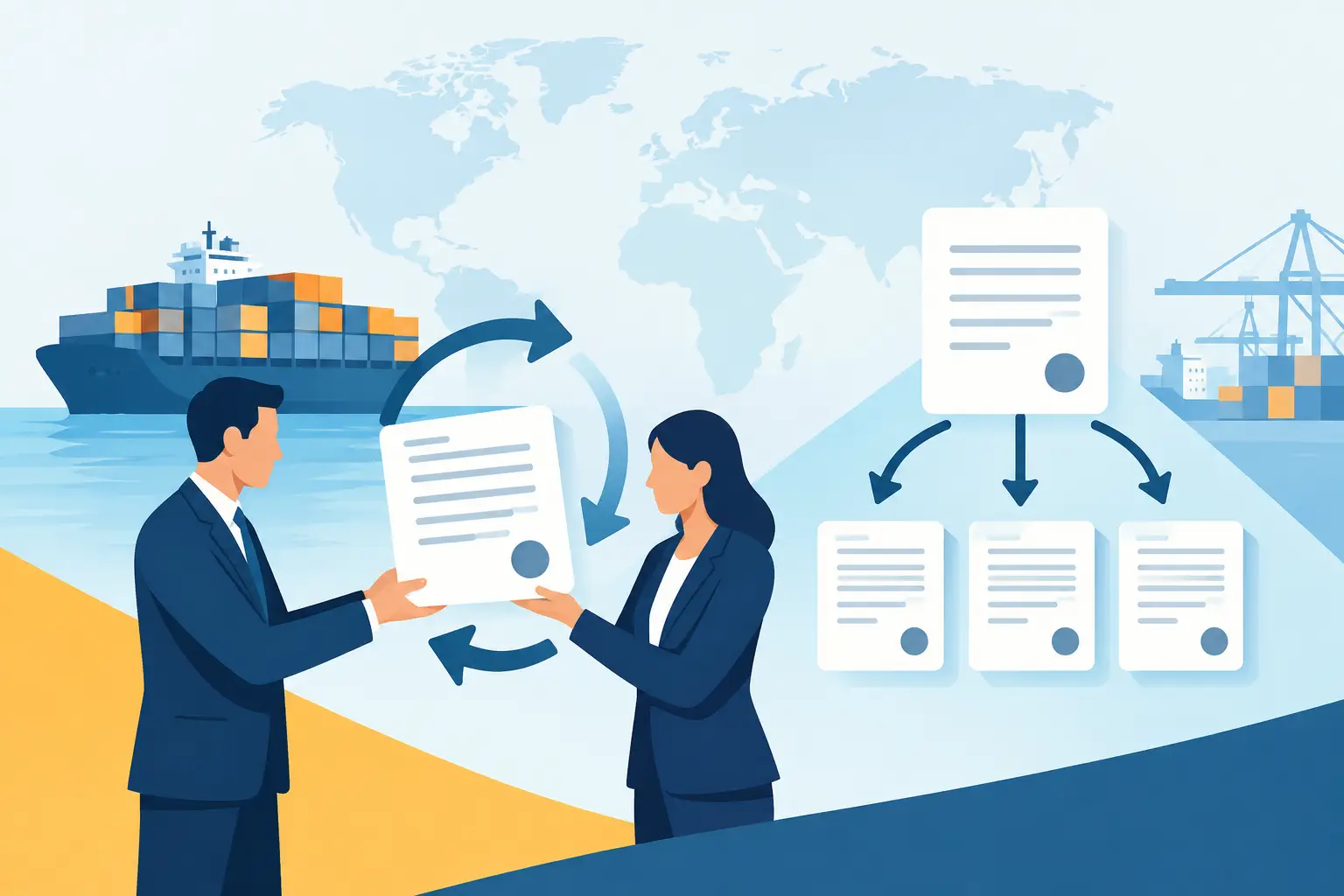
A letter of credit can make an overseas sale bankable, but only when its terms match the way the goods are actually bought, supplied and shipped. “Transferable and divisible L/Cs explained” is therefore not merely a banking question. It concerns the practical relationship between buyer, exporter, supplier and bank – and the point at which an intermediary may be paid without exposing either party to an unnecessary risk.
The terminology is often used loosely. A transferable credit has a precise meaning under the rules normally governing documentary credits. A divisible credit, by contrast, is not generally a formal category in the same sense. People may mean that the credit can be split between suppliers, that partial shipments are permitted, or that the proceeds may be shared. Those are different arrangements, with different consequences.
Back in the 1970s, I built a business using transferable and divisible letters of credit to assemble package deals for major contractors throughout the Middle East. These included projects such as Doha General Hospital, Salmaniya Medical Centre, the Kuwait Water Towers and the Aqaba Holiday Inn, along with numerous others across the region. The contractor placed a single order with my company, and I brought together products from numerous manufacturers, arranging for them to be shipped as one consignment. Without these two ingenious banking arrangements, I simply would not have had the financial resources to undertake such contracts. They enabled a small export merchant with limited capital to compete for substantial international business that would otherwise have been beyond his reach.
The Future of British Manufacturing Depends on Scale
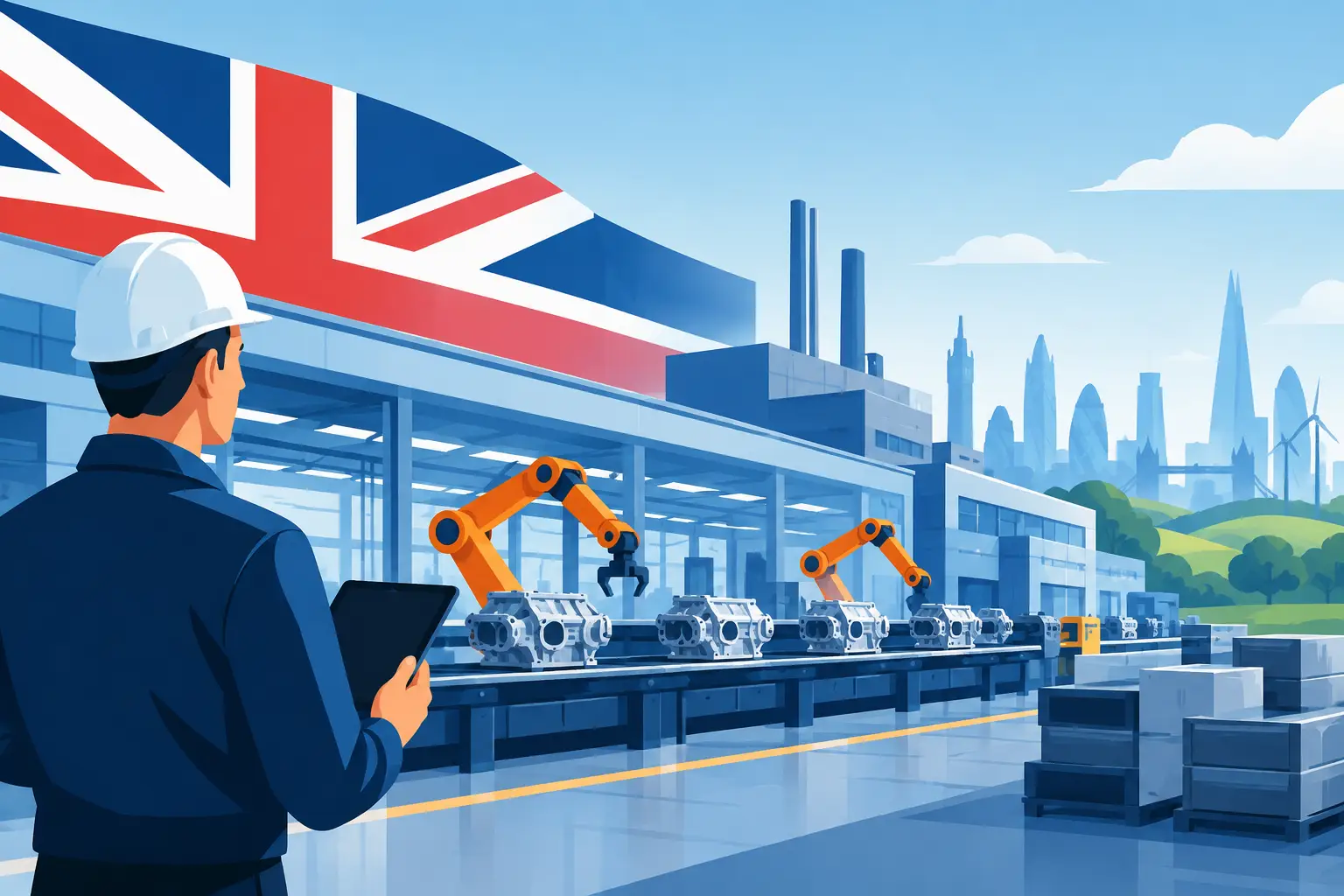
A factory does not become internationally competitive because a minister visits it in a hard hat, or because a press release describes its work as innovative. It does so through years of capital expenditure, skilled supervision, reliable suppliers, disciplined quality control and customers prepared to place repeat orders. The future of British manufacturing will be decided by these unglamorous realities as much as by artificial intelligence, electric vehicles or any other fashionable label.
Britain still makes far more than public discussion sometimes suggests. It produces advanced machinery, pharmaceuticals, aerospace components, specialist chemicals, food, medical equipment, defence systems and highly engineered products sold into demanding markets. Yet the sector is too often discussed either nostalgically, as though its best years are irretrievably behind it, or optimistically, as though a handful of start-ups can replace the industrial base that has been allowed to thin out.
Neither view is adequate. Britain can remain a serious manufacturing nation, but only if it treats manufacturing as a long-term national capability rather than a convenient political slogan.
What a Register of International Trade Experts Misses

A register of international trade experts sounds, at first hearing, like an obvious public service. A British firm facing its first overseas order ought surely to be able to find somebody qualified to help. Yet the phrase conceals a difficulty that has repeatedly defeated well-meaning export support schemes: international trade is not one profession. It is a chain of separate disciplines, and a weak link in any one of them can turn a promising sale into an expensive failure.
This was one of the central flaws in the Government’s Export Adviser Scheme. It treated experience in exporting as though it were a general competence that could be listed, matched and supplied. Some advisers were undoubtedly capable people. The problem was structural. A person who had sold industrial equipment successfully might know little about marine insurance; a banker who understood letters of credit might have no useful knowledge of selecting distributors; a lawyer might be excellent on contracts but unable to judge whether a consignment had been packed suitably for a tropical port.
The exporter did not need an impressive title. He needed the right judgement at the right moment.
How British Bills Become Law in Parliament
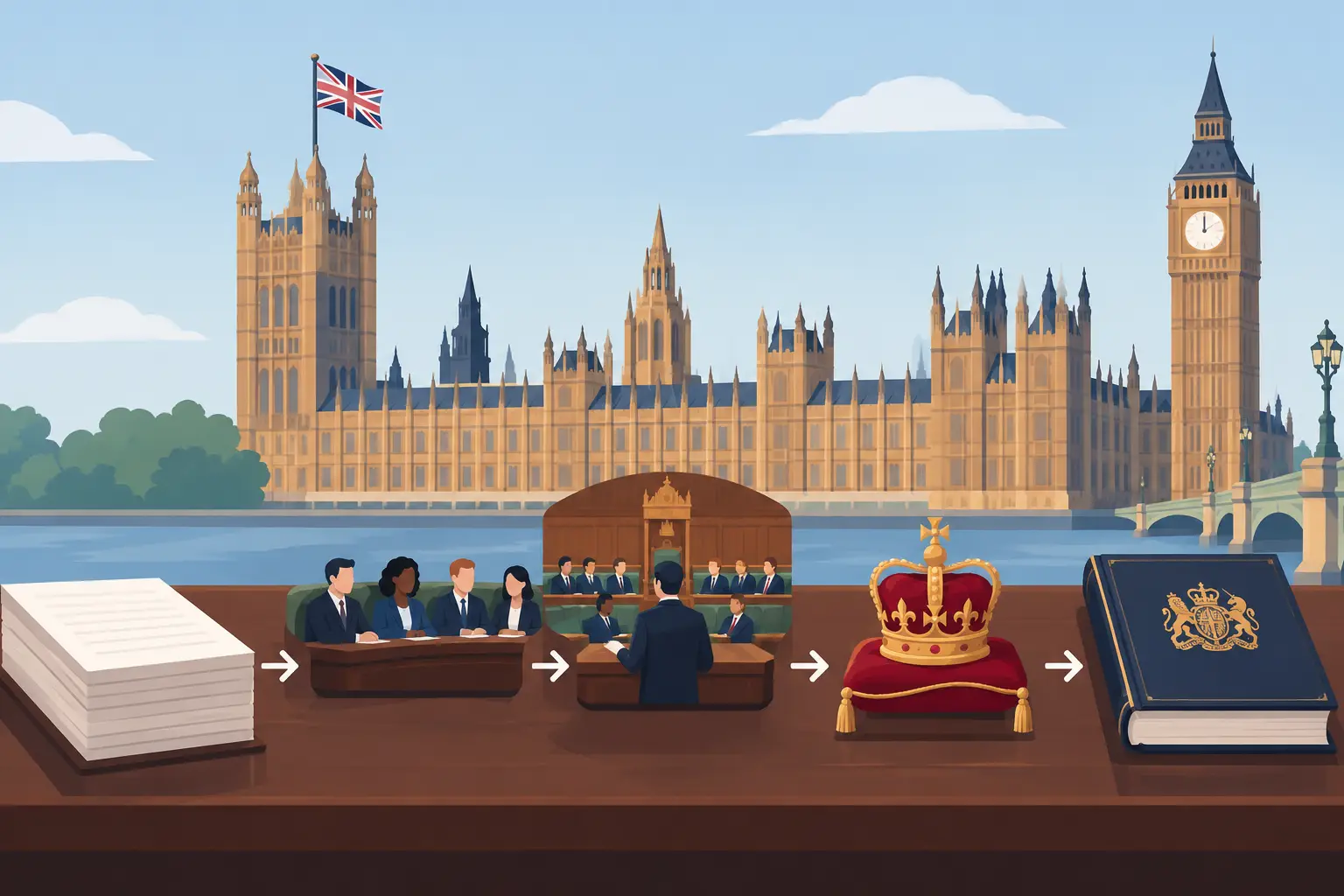
A Bill may look like a dry bundle of clauses, schedules and amendments, but it can alter the terms on which a business trades, a council spends, a police officer acts or a family receives support. Understanding how British bills become law is therefore more than a schoolroom lesson in procedure. It is a way of seeing where political promises meet legal reality – and where they are often delayed, diluted or defeated.
The process is deliberately slower than a government announcement suggests. A minister can announce an intention in the morning; turning it into enforceable law may take months, sometimes years. Along the way, parliamentary scrutiny, drafting problems, party arithmetic, pressure from outside Parliament and negotiation between the Commons and Lords all have their effect.
Why West Yorkshire Historical Fiction Matters

A chimney stack, a chapel door and a steep cobbled street can say more about a society than a page of official statistics. West Yorkshire historical fiction has particular power because the county’s past was neither genteel nor uniform. It was made in mills and workshops, on farms and in crowded terraces, in Nonconformist chapels and boardrooms, by families whose prospects could change abruptly with a trade cycle, a war or an injury at work.
For readers who want more than a costume drama set against northern scenery, the best fiction from this landscape offers a way of seeing how industrial Britain actually operated. It can show the pressure beneath prosperity: the discipline of the factory bell, the dependence of a town on one industry, and the sharp distinctions of class that were often visible in the street where a person lived.
Why Exporters Struggle: Risks Behind the Sale
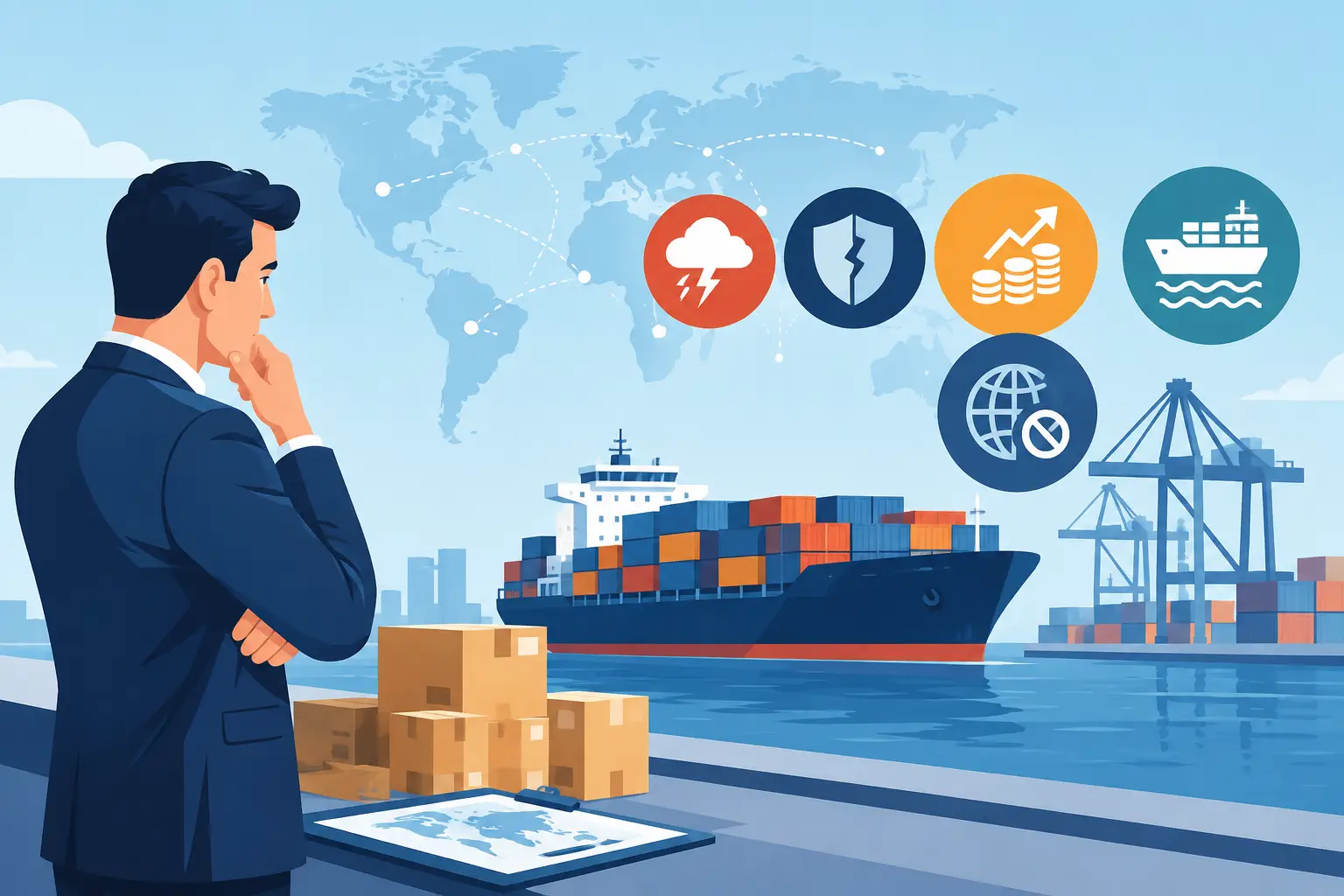
An export order can look profitable on the day it is signed and become a loss long before the goods reach their destination. This is why exporters struggle: selling abroad is not simply domestic selling with a longer delivery route. It is a chain of promises involving a buyer, banks, freight operators, insurers, officials and often agents, any one of whom can delay, alter or frustrate the transaction.
For much of my working life, export success depended less on enthusiasm for overseas markets than on patience, judgement and a willingness to ask awkward questions before accepting an order. The questions were practical. Who will pay? Under which law? Can the goods be cleared? Is the documentation exact? What happens if the issuing bank cannot honour its obligation? These matters are less glamorous than winning business, but they decide whether the business was worth winning.
Disciplines Involved in International Trade

A container may leave a British port carrying perfectly good machinery, food or components, yet the exporter can still lose money long before it reaches its destination. The disciplines involved in international trade extend far beyond finding a customer and arranging transport. They determine whether the seller is paid, whether the goods clear customs, whether the contract means what both parties think it means, and whether a promising overseas relationship survives its first difficulty.
That is why international trade has never been a single profession. It is a meeting place for commercial judgement, law, banking, transport, technical knowledge and human understanding. Digital systems have altered the speed of communication, but they have not removed the underlying risks. Indeed, a quicker transaction can expose poor preparation more rapidly.
Trading with India: Why Six HS Digits May Not Be Enough
Most exporters are familiar with the Harmonized System (HS), the international system used to classify goods. The first six digits are internationally standardised, so a product can be recognised under essentially the same HS classification worldwide. India, however, takes the system two digits further. India uses the eight-digit ITC (HS) — Indian Trade Classification based … Read more