How Inherited Privilege Shapes Politics in Britain

How Inherited Privilege Shapes Politics in Britain

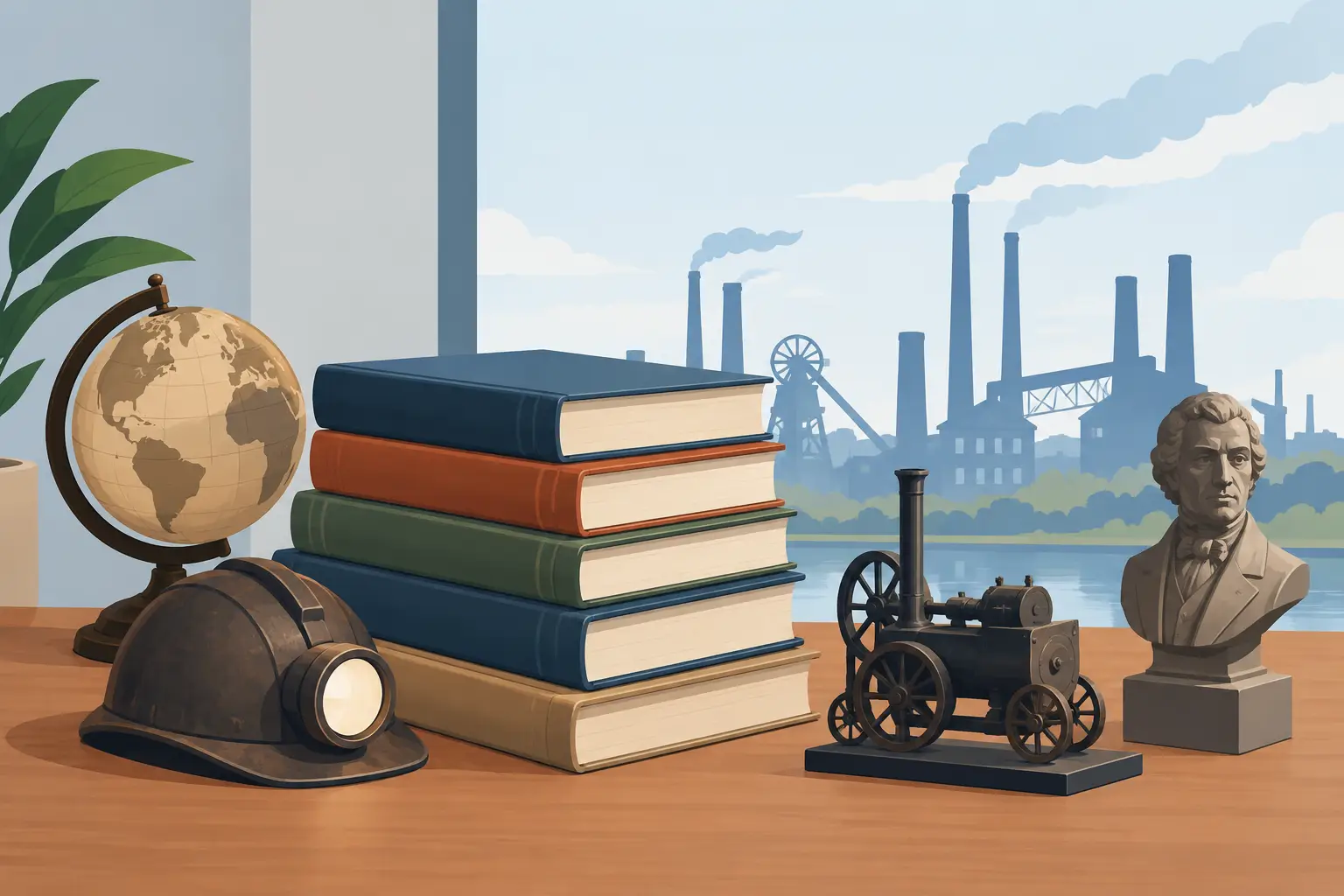
A person does not need to sit in the House of Lords, own a country estate or have attended a famous school to see how inherited privilege shapes politics. It can be seen in who is introduced to whom, who is encouraged to stand for office, whose accent is treated as authoritative, and who can afford the insecure years before a political career becomes paid employment. The question is not whether individual politicians work hard. Many plainly do. It is whether the route to influence is equally open before that hard work begins.

Britain has always had formal democratic institutions alongside informal hierarchies. Universal suffrage, elected councils and a professional Civil Service altered the country profoundly. Yet the older networks of family, schooling, property and social confidence did not simply disappear. They adapted, often becoming less visible precisely because equality of opportunity became the accepted public ideal.

Read more

Changing Global Supply Chains and What Matters

Changing Global Supply Chains and What Matters

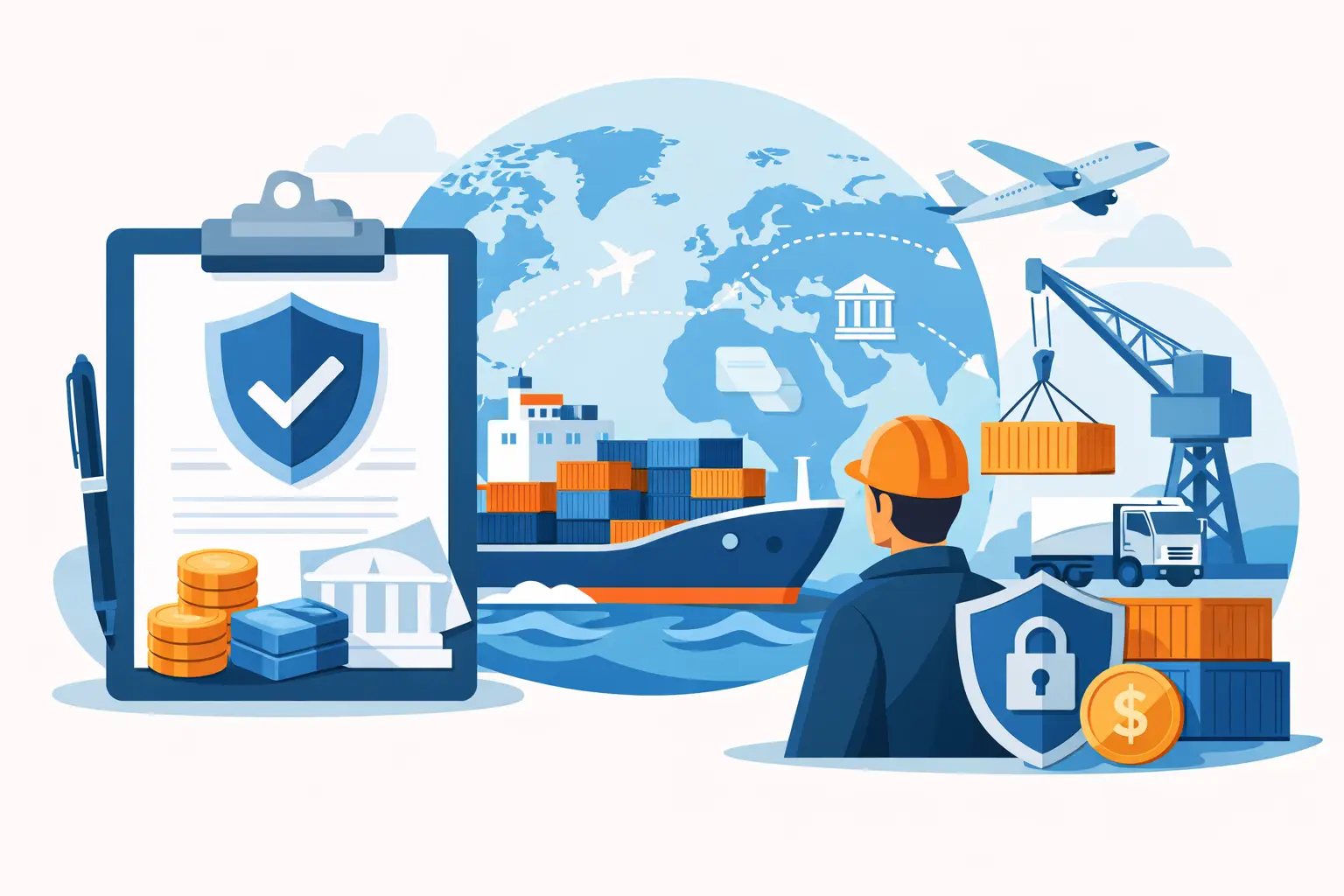
A container delayed in the Red Sea, a component held at a European border, or a factory in Asia closed for a week can now affect a British customer remarkably quickly. Changing global supply chains are not merely a concern for shipping lines and multinational manufacturers. They affect prices, stock availability, investment decisions and the confidence with which smaller firms pursue export markets.

For much of the later twentieth century, international trade worked on an increasingly simple assumption: make goods where costs are lowest, move them efficiently, and rely on dependable routes and predictable rules. That assumption was never wholly true, but it was close enough to shape corporate behaviour. The modern supply chain was built around efficiency. It is now being rebuilt around resilience, security and political risk.

Read more

Best Books on British Democracy Worth Reading

Best Books on British Democracy Worth Reading

The British constitution is often described as unwritten. That is a useful shorthand, but it can obscure the more awkward truth: much of British democracy rests on conventions, habits and restraints that work only while those in authority accept their limits. A good selection of the best books on British democracy therefore does more than explain how Parliament votes or how governments are formed. It shows where power actually sits, who is able to exercise it, and what happens when established checks are tested.

My books The House of Managed Democracy and The House of Inherited Privilege tell the whole story of how the rules and laws have been manipulated by self interest.

For the serious general reader, the most useful reading is neither wholly academic nor narrowly partisan. It should combine history with an understanding of the machinery of government, and leave room for the uncomfortable questions of privilege, representation and accountability.

Read more

What an Electric Car Ownership Study Reveals

What an Electric Car Ownership Study Reveals

The useful question is not whether electric cars are the future. It is whether one fits the life you actually lead. An electric car ownership study ought therefore to begin not with official range figures or grand claims about saving the planet, but with the ordinary journeys that fill a week: shopping, visiting family, commuting, appointments and the occasional longer run.

After more than five decades of driving, including an earlier fondness for Jaguars, Daimlers and six-cylinder Volvos, I do not regard the move to electric motoring as a moral conversion. It is a practical decision. Now retired and travelling less far from home, an electric car suits my requirements better than the petrol cars I once enjoyed. That does not make it the universal answer. It is, as so often, horses for courses.

Read more

Exporting Versus Licensing Overseas – Choose Well

Exporting Versus Licensing Overseas - Choose Well

A firm with a sound product and an interested overseas enquiry can make exporting versus licensing overseas appear to be a simple commercial choice. It is not. The decision determines who deals with the customer, who carries the stock, where the knowledge resides and, in time, who owns the relationship with the market.

In my experience, the early enthusiasm around a foreign opportunity is often justified. What is less often examined is whether the proposed route to market suits the product, the firm’s resources and its willingness to remain involved once the first order has been won. A sale abroad and a licence abroad may both produce revenue, but they create very different businesses.

Read more

British Constitution Explained Simply in Practice

British Constitution Explained Simply in Practice

A visitor to Westminster might reasonably ask for a copy of the British constitution, only to discover that there is no single volume to hand over. That apparent oddity is the starting point for the British constitution explained simply. Britain has constitutional rules, many of them old and some surprisingly adaptable, but they are spread across Acts of Parliament, court decisions, political customs and historic documents.

This arrangement can look untidy, particularly beside constitutions written down in one authoritative text. Yet it has endured because it allows change without requiring a grand national rewriting exercise every time politics or society moves on. Its weakness is equally plain: much depends on restraint, good faith and a shared understanding of rules that are not always legally enforceable.

Read more

Why Never Underestimate a Freight Forwarder

Why Never Underestimate a Freight Forwarder

A shipment can look straightforward on a sales order: collect the goods, book the transport, send the documents and await payment. Anyone who has spent time in export knows better. Never underestimate a freight forwarder, because the apparent simplicity of moving goods between countries conceals a chain of decisions in which one overlooked detail can stop a consignment, absorb a profit margin or sour a customer relationship built over years.

Freight forwarders are sometimes treated as mere booking agents, called upon after the commercial work has been done. That is a costly misunderstanding. A good forwarder is often the person who sees the whole physical transaction at once: the nature of the goods, the packing, the route, the carrier, the port, the customs requirements, the insurance exposure and the deadline that matters at the other end.

Read more

A Guide to Practical Export Documentation

A Guide to Practical Export Documentation

A consignment can be perfectly made, competitively priced and wanted by the customer, yet still fail at the point where paperwork meets the border. A guide to practical export documentation must therefore begin with a plain truth: documents are not an administrative afterthought. They are the written account of what has been sold, where it is going, who is responsible for it, and on what terms it may enter another country.

For many years, exporters became accustomed to treating the movement of goods to Europe as largely routine. The change in the UK’s trading relationship with the European Union made the underlying disciplines visible again. Those disciplines were always present in trade beyond Europe, and they remain fundamental whether goods travel by parcel carrier, air freight, container or lorry.

The paperwork need not be mysterious. It does, however, need to be consistent. Most expensive errors arise not because an exporter lacks a particular form, but because information has been copied carelessly, responsibility has been assumed rather than agreed, or someone has looked at one document in isolation.

Read more

Export Documentation: From Carbon Paper to the Cloud

The way we produce business documentation today bears almost no resemblance to the methods used when I entered international trade.

Today, an invoice can be prepared on a computer, corrected without leaving a trace, converted into a PDF and transmitted to several people around the world within seconds. Identical copies can be printed whenever required, and the electronic original can be stored, searched for and retrieved years later.

In the 1960s, producing export documentation was a considerably more physical—and sometimes exhausting—exercise.

Read more