
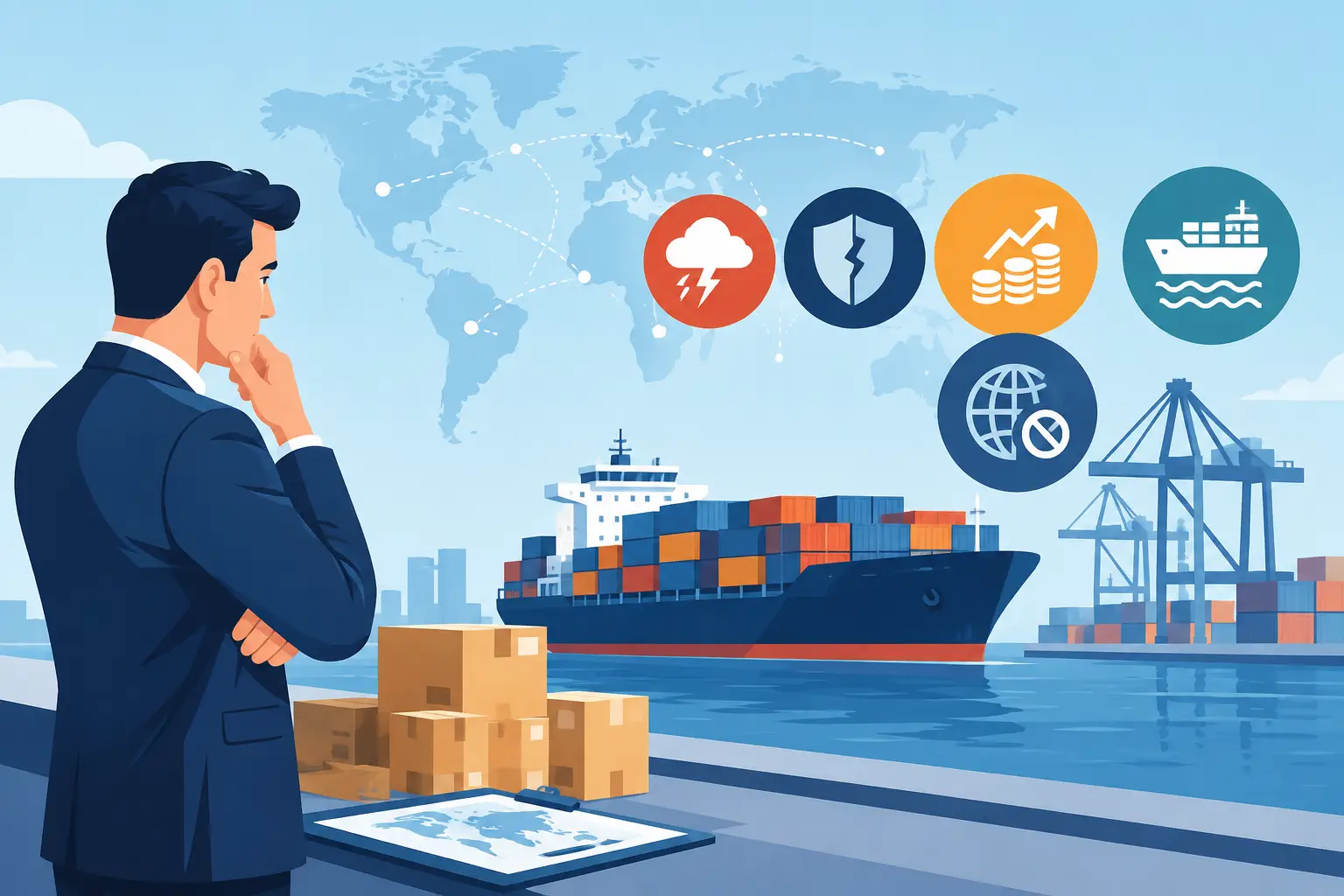
An export order can look profitable on the day it is signed and become a loss long before the goods reach their destination. This is why exporters struggle: selling abroad is not simply domestic selling with a longer delivery route. It is a chain of promises involving a buyer, banks, freight operators, insurers, officials and often agents, any one of whom can delay, alter or frustrate the transaction.
For much of my working life, export success depended less on enthusiasm for overseas markets than on patience, judgement and a willingness to ask awkward questions before accepting an order. The questions were practical. Who will pay? Under which law? Can the goods be cleared? Is the documentation exact? What happens if the issuing bank cannot honour its obligation? These matters are less glamorous than winning business, but they decide whether the business was worth winning.
Why exporters struggle after winning the order
The first difficulty is that an overseas order is often treated as proof of a sale. It is not. Until payment has been received in a usable currency, on terms that leave a margin after all costs, it is an expectation rather than a completed commercial transaction.
Domestic traders generally know the legal environment, credit culture and practical habits of their customers. An exporter may know none of these things well. Distance obscures warning signs. A buyer may appear substantial in correspondence, possess an impressive website and make confident promises, while having little capital, poor credit or political connections that offer no real protection when a dispute arises.
There is also a natural imbalance in the timing of an export transaction. The supplier is often asked to manufacture, pack and dispatch goods before receiving the money. By the time a problem emerges, the goods may be at sea, held in a port, incorporated into a project, or impossible to recover at sensible cost. A dispute that would be irritating in Britain can become ruinous across several jurisdictions.
This is not an argument against exporting. Overseas markets can provide growth, resilience and access to customers unavailable at home. But the apparent opportunity must be measured against the cost of controlling risk. Small and medium-sized firms can be particularly exposed because one badly managed order may absorb working capital needed for the rest of the business.
Payment security is only as sound as the institution behind it
A Letter of Credit has long been presented as one of the principal safeguards available to exporters. Properly structured, it can replace reliance on a distant buyer with an undertaking from a bank, provided the exporter presents documents that comply precisely with its terms. That proviso matters. Banks deal in documents, not in the physical quality of goods or the fairness of a dispute.
More importantly, a Letter of Credit is only as strong as the bank issuing it, or the bank confirming it. There is a temptation to see the word “bank” as a guarantee of permanence. Banking history should have cured us of that illusion. Barings collapsed. BCCI was closed. Midland was absorbed by HSBC, Halifax became part of Lloyds, and the Co-operative Bank passed to new ownership. The 2008 crisis brought the failure of Lehman Brothers and Washington Mutual, while European institutions including Fortis and Dexia required rescue.
For ordinary UK depositors, eligible deposits now have Financial Services Compensation Scheme protection up to £120,000 per person per authorised institution. That is not a solution for an exporter relying on a £500,000 undertaking from an overseas bank. The exporter must consider the standing of the issuing bank, the country in which it operates, exchange controls, sanctions exposure and whether a reputable bank in the exporter’s own market will add confirmation.
Confirmation costs money, and on a modest order it may make the sale uneconomic. Yet the cheaper alternative can amount to accepting unsecured country and bank risk without admitting it. There is no universal answer. A long-established customer in a stable market may justify open-account terms supported by credit insurance. A first transaction in a volatile market may justify nothing less than advance payment or a confirmed Letter of Credit.
Documents can defeat a sound commercial deal
Even where the buyer and banks are dependable, documentation can be the point of failure. A credit may require a transport document, certificate of origin, inspection certificate, invoice and packing list to match its wording exactly. A date, port name, description or spelling difference that seems trivial to a manufacturer can give a bank grounds to reject the presentation.
This has always been one of the more unforgiving features of documentary trade. Digital systems have reduced some delays, but they have not removed the underlying discipline. If the credit says one thing and the document says another, an exporter may find that a technically compliant shipment has become a technically non-compliant claim.
The answer is not merely to hand the matter to a freight forwarder or bank. Both may be useful and highly competent, but the exporter remains responsible for understanding the contract and approving the documents. The sales team, production department, logistics staff and finance function must work from the same agreed terms before goods are made, not after they have left the works.
Freight, customs and politics alter the economics
Exporters must also contend with events that neither party controls. Freight rates can rise sharply. Containers may be unavailable. A port may be congested, a vessel diverted or cargo delayed by a strike. Perishable, seasonal or project-specific goods can lose much of their value through delay alone.
Customs rules add another layer. Commodity classification, origin requirements, product standards, labelling, licences and local registration can determine whether goods move at all. The difficulty is not always deliberate obstruction. Different administrations interpret rules differently, and importers sometimes fail to obtain approvals they promised to secure.
Then there is political risk. A government can impose import restrictions, freeze foreign exchange, alter tariffs or introduce measures that make payment difficult. War, civil disorder and sanctions can stop trade entirely. Experienced exporters learn not to confuse a country’s commercial potential with its practical accessibility. A growing market may still be unsuitable for credit sales or complex capital equipment unless the risks are priced and controlled.
Currency risk deserves similar attention. A margin can disappear if a contract is priced in a currency that falls before payment is received. Quoting in sterling may protect the exporter but can make the offer less attractive to the customer. Quoting in the buyer’s currency may win the order but transfers uncertainty back to the supplier. Forward cover can help, although it has a cost and requires realistic forecasting of payment dates.
The hidden burden on smaller firms
Large multinationals can spread risk across countries, maintain specialist teams and absorb a delayed payment more easily. A smaller exporter may have one person dealing with quotations, compliance, shipping, customer calls and finance. That person can be highly capable, but the volume of detail is considerable.
The burden is not only administrative. Exporting ties up cash. Materials must be bought, wages paid and production capacity committed before payment arrives. Longer transit times and extended credit periods mean that a profitable order can strain a healthy firm. Banks may be cautious about lending against overseas receivables, particularly where the buyer, country or security is unfamiliar.
Government export support, trade missions and market intelligence can be helpful, but they do not substitute for disciplined credit control. Nor should a favourable conversation with a prospective distributor be mistaken for evidence of financial strength. References need checking, contracts need scrutiny, and terms need to reflect what could go wrong rather than what everyone hopes will happen.
Better exporting begins with a smaller promise
The sensible first order is not always the largest one. In an unfamiliar market, a smaller shipment on secure payment terms can reveal how the buyer performs, how documents are handled and whether the local logistics chain functions as expected. That knowledge has value. It may prevent a much larger mistake later.
Exporters also benefit from treating payment terms, Incoterms, insurance, currency and documentation as part of the product offer, rather than as paperwork to be settled after the price has been agreed. A competitive price without defensible terms is not competitiveness. It is often an undisclosed concession.
The enduring lesson is plain. International trade rewards preparation, but it punishes assumption. Before committing stock, cash and reputation to an overseas order, an exporter should be able to explain exactly who carries each risk, who has the means to pay, and what practical remedy exists if they do not.