Currency Forward Buying and Hedging Explained

Currency Forward Buying and Hedging Explained

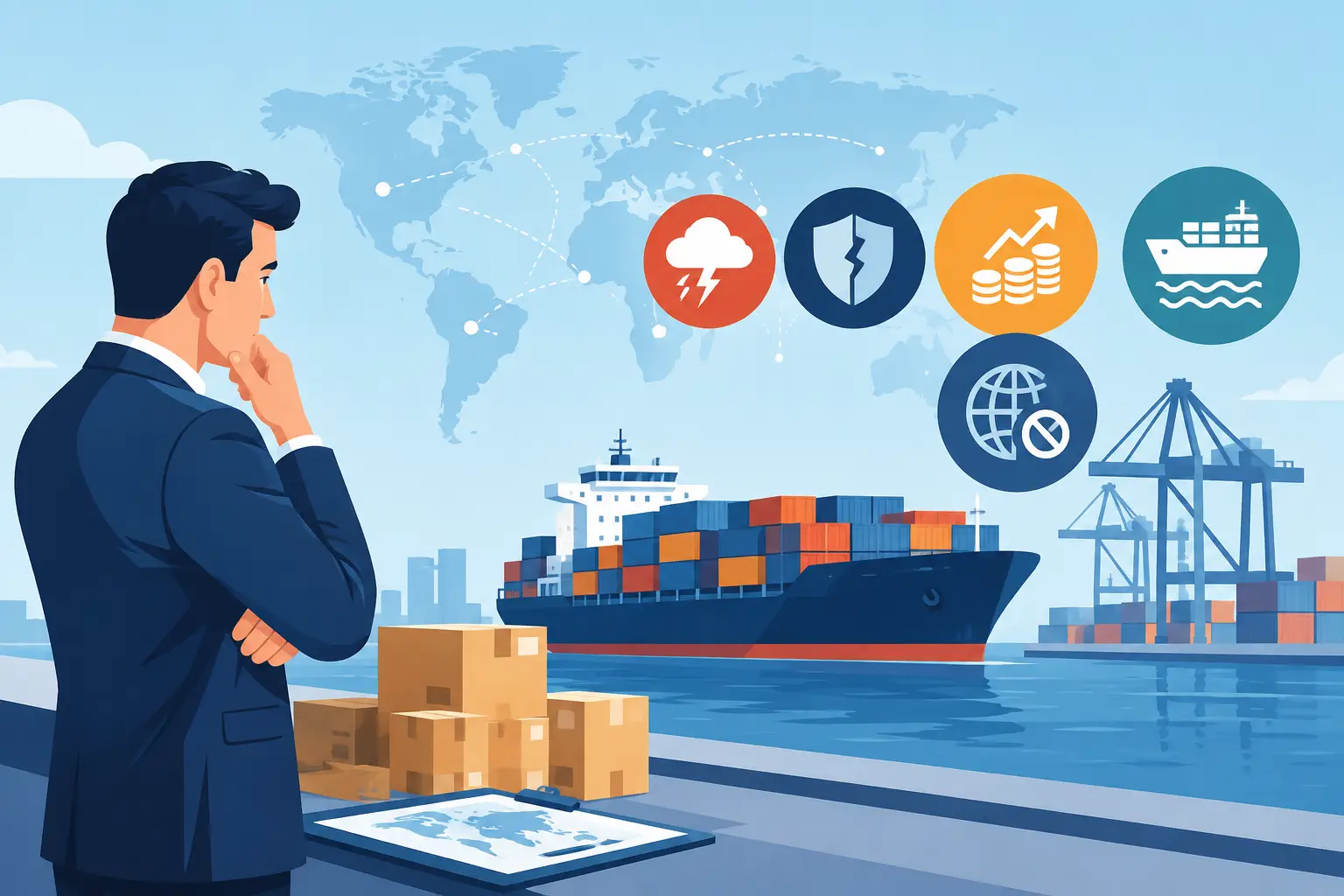
A profitable export order can be turned into a disappointing one without a single fault in the product, delivery or customer relationship. The damage may be done simply because sterling moves between accepting the order and receiving the money. Currency forward buying and hedging are practical ways of preventing an exchange-rate movement from deciding whether a carefully negotiated transaction makes money.

For businesses trading overseas, currency is not a technical footnote for the accounts department. It is part of the commercial risk. Anyone who has spent time winning orders in distant markets knows how much work can sit behind a quotation: visits, agents, samples, freight discussions, specifications, credit checks and lengthy negotiation. It is poor business to leave the final margin exposed to a market movement over which neither buyer nor seller has any control.

Read more

The Practical Export Guide for Real-World Trade

The Practical Export Guide

An export order can look deceptively simple: agree a price, make the goods, send them abroad and wait to be paid. The practical export guide begins where that comforting picture ends. A consignment is not merely a product moving from a British factory or warehouse to an overseas customer. It is a chain of obligations involving seller, buyer, carrier, insurer, bank, freight forwarder and customs authority. If one link is wrong, the effects are seldom confined to one sheet of paper.

The most expensive export errors are often not dramatic. A document is issued late, an Incoterm is used without understanding its consequences, a letter of credit is accepted with impossible conditions, or goods arrive at a port without the information needed for clearance. Each may appear administrative. In practice, each can delay delivery, undermine a customer relationship or leave the exporter unpaid.

This is why exporting cannot sensibly be reduced to salesmanship, customs compliance or freight alone. Those disciplines meet at the point where a firm has made a binding promise to deliver goods, on stated terms, to a customer in another jurisdiction. The work is to ensure that the promise can be performed.

Read more

Changing Global Supply Chains and What Matters

Changing Global Supply Chains and What Matters

A container delayed in the Red Sea, a component held at a European border, or a factory in Asia closed for a week can now affect a British customer remarkably quickly. Changing global supply chains are not merely a concern for shipping lines and multinational manufacturers. They affect prices, stock availability, investment decisions and the confidence with which smaller firms pursue export markets.

For much of the later twentieth century, international trade worked on an increasingly simple assumption: make goods where costs are lowest, move them efficiently, and rely on dependable routes and predictable rules. That assumption was never wholly true, but it was close enough to shape corporate behaviour. The modern supply chain was built around efficiency. It is now being rebuilt around resilience, security and political risk.

Read more

Exporting Versus Licensing Overseas – Choose Well

Exporting Versus Licensing Overseas - Choose Well

A firm with a sound product and an interested overseas enquiry can make exporting versus licensing overseas appear to be a simple commercial choice. It is not. The decision determines who deals with the customer, who carries the stock, where the knowledge resides and, in time, who owns the relationship with the market.

In my experience, the early enthusiasm around a foreign opportunity is often justified. What is less often examined is whether the proposed route to market suits the product, the firm’s resources and its willingness to remain involved once the first order has been won. A sale abroad and a licence abroad may both produce revenue, but they create very different businesses.

Read more

Why Never Underestimate a Freight Forwarder

Why Never Underestimate a Freight Forwarder

A shipment can look straightforward on a sales order: collect the goods, book the transport, send the documents and await payment. Anyone who has spent time in export knows better. Never underestimate a freight forwarder, because the apparent simplicity of moving goods between countries conceals a chain of decisions in which one overlooked detail can stop a consignment, absorb a profit margin or sour a customer relationship built over years.

Freight forwarders are sometimes treated as mere booking agents, called upon after the commercial work has been done. That is a costly misunderstanding. A good forwarder is often the person who sees the whole physical transaction at once: the nature of the goods, the packing, the route, the carrier, the port, the customs requirements, the insurance exposure and the deadline that matters at the other end.

Read more

A Guide to Practical Export Documentation

A Guide to Practical Export Documentation

A consignment can be perfectly made, competitively priced and wanted by the customer, yet still fail at the point where paperwork meets the border. A guide to practical export documentation must therefore begin with a plain truth: documents are not an administrative afterthought. They are the written account of what has been sold, where it is going, who is responsible for it, and on what terms it may enter another country.

For many years, exporters became accustomed to treating the movement of goods to Europe as largely routine. The change in the UK’s trading relationship with the European Union made the underlying disciplines visible again. Those disciplines were always present in trade beyond Europe, and they remain fundamental whether goods travel by parcel carrier, air freight, container or lorry.

The paperwork need not be mysterious. It does, however, need to be consistent. Most expensive errors arise not because an exporter lacks a particular form, but because information has been copied carelessly, responsibility has been assumed rather than agreed, or someone has looked at one document in isolation.

Read more

Export Documentation: From Carbon Paper to the Cloud

The way we produce business documentation today bears almost no resemblance to the methods used when I entered international trade.

Today, an invoice can be prepared on a computer, corrected without leaving a trace, converted into a PDF and transmitted to several people around the world within seconds. Identical copies can be printed whenever required, and the electronic original can be stored, searched for and retrieved years later.

In the 1960s, producing export documentation was a considerably more physical—and sometimes exhausting—exercise.

Read more

The Practical Export Guide for All Exporters

The Practical Export Guide

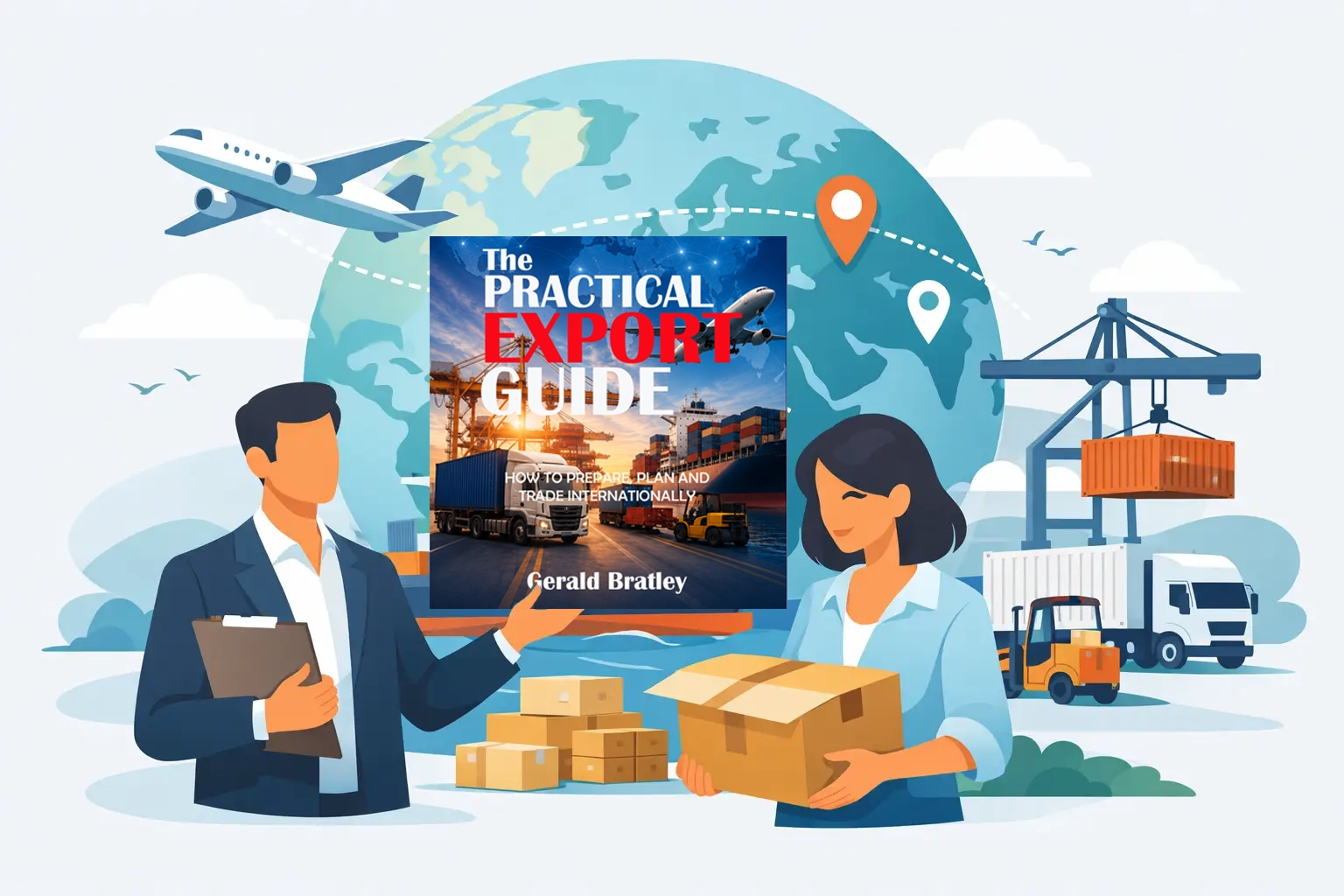
An export order can look reassuringly simple on a desk: a customer, a product, a price and a destination. The Practical Export Guide begins where that simplicity ends. Between accepting an order and receiving payment lies a chain of commercial decisions, documents, people, regulations and physical movement. A weakness in any one of them can turn a promising overseas sale into an expensive lesson.

For many years, international trade was learned by working alongside experienced export clerks, shipping managers, salespeople, freight forwarders and bank staff. Much of that informal apprenticeship has disappeared. Systems may now be electronic, but the underlying responsibilities remain much the same. The exporter still has to establish what has been sold, to whom, on what terms, how it will travel, who carries the risk, and how the business will be paid.

This is not an argument against specialist training. Customs procedures, commodity codes, origin rules, export controls, Incoterms, transport and documentary credits all deserve careful study in their own right. The difficulty is that a newcomer can study each subject separately and still fail to see how an export transaction works as a whole. That is the gap a practical overview is intended to fill.

Read more

What Is Export Management? A Practical View

What Is Export Management? A Practical View

A promising order can become an expensive lesson remarkably quickly. The customer may be genuine, the product well made and the price competitive, yet a shipment can still fail through an unsuitable payment term, an overlooked import rule, poor packing, or an agent who has promised more than the supplier can deliver. That is why the question, what is export management, deserves a fuller answer than ‘sending goods abroad’.

Export management is the planned direction and control of a business’s overseas sales activity. It brings together market selection, customer and distributor management, pricing, contracts, transport, documentation, customs, payment, compliance and after-sales service. Above all, it is the practical discipline of making sure that a sale made in one country can be supplied, paid for and supported in another without destroying profit or reputation.

It is a management responsibility, not merely an administrative function. Documents matter greatly, but documents are the visible evidence of decisions that should have been made much earlier.

Read more