Trade Missions Versus Exhibitions: Which Works?

Trade Missions Versus Exhibitions: Which Works?

An export manager with a modest budget cannot afford to collect impressive-looking contacts that lead nowhere. That is the practical question behind trade missions versus exhibitions. Both can introduce a company to overseas markets, but they do so in markedly different ways. One puts a business in front of selected people; the other asks it to compete for attention in a crowded commercial arena.

Having worked with overseas markets before video calls, online directories and instant translation changed the mechanics of international trade, I remain wary of any claim that one route is always superior. The value depends on the product, the market, the company’s stage of export development and, above all, the preparation done before anyone boards a plane or books a stand.

Read more

Have Qualifications Replaced Experience in Britain?

Have Qualifications Replaced Experience in Britain?

A job advertisement asking for a degree, several professional certificates and five years’ experience in a narrowly defined role tells a revealing story. It may look exacting, but it can also describe an employer trying to transfer the burden of judgement from its own managers to a list of credentials. Has qualifications replaced experience in Britain? Not completely. Yet in many organisations, qualifications have become a convenient proxy for capability, sometimes at considerable cost.

The issue matters well beyond individual careers. It affects how British firms compete, how public services retain knowledge, whether younger people are offered realistic routes into work and how effectively organisations deal with difficulty. A qualification can establish that someone has studied a subject. It cannot, by itself, show how that person will react when a customer changes the specification, a shipment is delayed at a frontier, a machine fails, or a carefully prepared plan meets the habits of another country.

Read more

Export Product Pricing That Protects Your Margin

Export Product Pricing That Protects Your Margin

A quotation can look profitable on the day it is issued and become a loss before the goods leave the works. That is the central difficulty of export product pricing. The price is not merely the factory cost plus a convenient percentage. It is a commercial judgement about transport, currency, credit, documentation, local conditions and the party that will carry each risk.

Those who have worked in overseas markets learn this quickly. A customer may focus on the unit price, while the exporter must consider the whole journey from production to payment. If either side has misunderstood what is included, goodwill is soon replaced by argument. Margin disappears particularly fast when an exporter has quoted casually in an unfamiliar market.

Read more

Are Banks Needed If Documentary Payments Go Digital?

Are Banks Needed If Documentary Payments Go Digital?

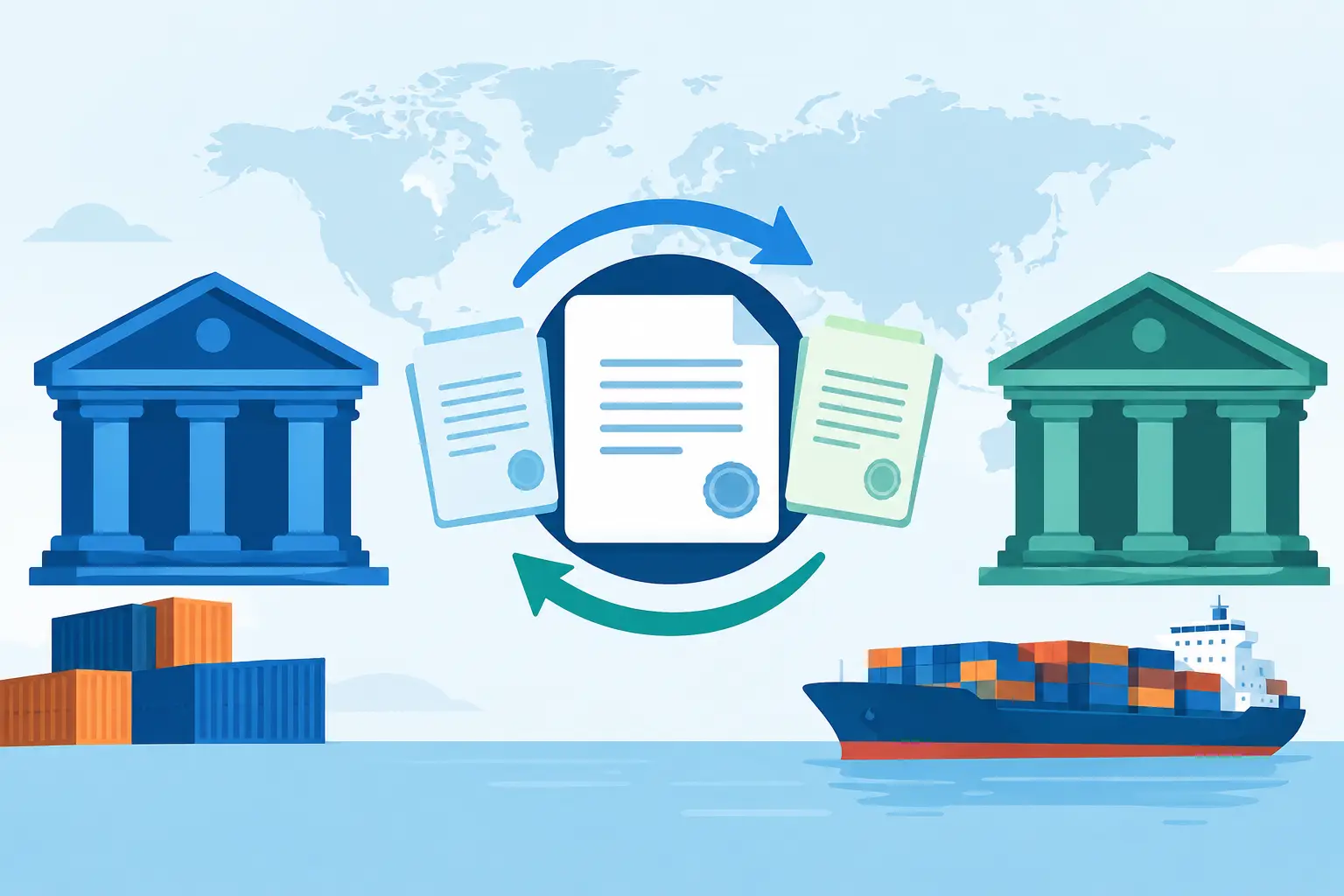
A set of export documents once travelled the world by courier, often at considerable cost and with uncomfortable delays. An invoice, packing list, certificate of origin, inspection certificate and bill of lading might be perfectly prepared, yet still sit in a bank pouch or airport warehouse while a ship arrived at its destination. The obvious question is: are banks needed if documentary payments become all digital?

The short answer is yes, but not always in the same capacity, and not for every transaction. Digitisation can remove much of the physical handling that made documentary trade slow and expensive. It cannot, by itself, remove the commercial risks that led exporters and importers to use banks in the first place.

The distinction matters. Too much discussion of digital trade assumes that moving a document from paper to screen also removes the need for trusted intermediaries. It does not. A document is not merely information. In international trade it can be evidence, an instruction, a claim on goods, and the trigger for payment or finance.

Read more

Trends in Global Trade and What Has Changed

Trends in Global Trade and What Has Changed

A container arriving late at Felixstowe, a component held up at a border, or a customer asking for prices in a volatile currency can tell us more about trends in global trade than a grand speech about globalisation. Trade remains immense, inventive and indispensable. Yet the assumptions that governed it for much of the late twentieth century – predictable routes, steadily falling barriers and the primacy of lowest cost – have been weakened.

Having begun work in international trade when overseas communication involved telexes, cables and costly telephone calls, I am wary of claims that trade has suddenly become either simple or impossible. The tools have changed beyond recognition. The central disciplines have not: knowing the customer, understanding the market, getting the documentation right, protecting cash flow and maintaining patience when events take an unwelcome turn.

Read more

60 Years Improving Communication, Then Phones Went Off

60 Years Improving Communication, Then Phones Went Off

There is an odd contradiction at the heart of modern life. We spent 60 years improving communication, then we turned the phones off. Not literally, of course. The devices are everywhere: on restaurant tables, beside beds, in meetings and in the hands of people crossing roads. Yet the ordinary expectation that one person may telephone another, speak directly and settle a matter has quietly been withdrawn.

For those of us who began working when international contact meant a trunk call, a telex, an air letter or an expensive cable, this is more than nostalgia. It is a question of what communication is for. We have gained speed, volume and reach. We have also, in many organisations, lost the direct human exchange that creates trust, resolves ambiguity and makes responsibility difficult to evade.

Read more

Direct Exporting Versus Agents – Which Route?

Direct Exporting Versus Agents - Which Route?

A promising enquiry from overseas can make the choice between direct exporting versus agents appear simpler than it is. The prospect of dealing with the customer oneself is attractive: higher margins, direct control and no commission. Yet the agent who knows the language, the trade customs and the people behind the buying decision may turn a tentative opportunity into a sustainable market.

This is not merely a question of how goods reach another country. It concerns where an exporter places responsibility, knowledge and risk. In my own early years in international trade, long before e-mail, a representative abroad could be the difference between hearing of an opportunity in time and learning about it after a competitor had won it. Communications took days, travel was expensive, and a reliable local contact carried real weight. Digital communication has changed the speed of contact, but it has not removed the need for judgement on the ground.

Read more

How Trade Diplomacy Turns Contacts Into Contracts

How Trade Diplomacy Turns Contacts Into Contracts

A promising overseas enquiry is not the same thing as an export order. Between the two lies trade diplomacy: the patient, often unglamorous work of establishing confidence between people, companies and governments that do not automatically understand one another. It is where commercial judgement meets national interest, and where a useful introduction can either develop into years of business or disappear after the first polite exchange.

For much of my working life in international trade, that distinction mattered greatly. A manufacturer might possess a sound product, competitive engineering and the determination to export. Yet it could still fail abroad because it misread the local decision-making structure, relied on the wrong intermediary, or treated a government connection as a shortcut rather than the beginning of a relationship.

See the importance of culture and diplomacy in The Practical Export Guide

Read more

Export Is an Adventure, Not a Spreadsheet

Export Is an Adventure, Not a Spreadsheet

A cable sent from a hotel desk could take days to produce an answer. A missed connection might add another week to a journey. A prospective customer in a distant market could be the beginning of a lasting contract or a costly waste of time. Export is an adventure, but not in the light-hearted sense sometimes suggested by modern business language. It is an undertaking that tests judgement, stamina and the ability to remain useful when the familiar support of home and office is a very long way away.

For those who entered international trade before digital communications, distance was not an abstract matter. It was physical. It meant long flights, uncertain local arrangements, unfamiliar food, imperfect information and, frequently, weeks or months apart from family. Yet the basic truth has not changed. Selling overseas still asks more of a business than selling down the road. It requires a willingness to understand another country’s commercial habits, institutions and expectations, rather than assuming that a successful British offer will speak for itself. See the authors’ journey in The Export Adventurer

Read more

An Export Market Entry Example That Holds Up

An Export Market Entry Example That Holds Up

A factory can be busy, technically capable and well regarded at home, yet still fail abroad for a simple reason: it mistakes overseas interest for a market. This export market entry example follows the more demanding route taken by many successful British engineering firms. It begins not with a grand international strategy, but with one carefully chosen country, one practical product problem and a willingness to learn before committing scarce capital.

The example is representative rather than tied to a single company, but its conditions will be familiar to anyone who has sold industrial goods overseas. A Midlands manufacturer of process-control equipment had a sound domestic order book. Its valves and monitoring units were dependable, repairable and well suited to water treatment and light industrial plants. An unsolicited enquiry from a distributor in the Gulf suggested an obvious opportunity. It was not, however, a reason to appoint the first person who sent a business card.

Read more