Why the Government’s Export Adviser Scheme Failed

Why the Government’s Export Adviser Scheme Failed

For many small and medium-sized firms, the question of why the governments export adviser scheme failed is not an abstract matter of public administration. It goes to the heart of a familiar frustration: Britain says it wants more firms to export, yet practical help has too often been difficult to find, uneven in quality, or delivered by people with little experience of winning business overseas.

The failure was not caused by a shortage of good intentions. Nor was it because exporting is inherently beyond the reach of smaller companies. Britain has produced generations of capable manufacturers, engineers, specialists and traders who have succeeded in demanding overseas markets. The weakness lay in the way expertise was selected, organised and valued.


Read more

What Makes a Post-War Britain Novel Endure?

What Makes a Post-War Britain Novel Endure?

The winter of 1947 offers a better opening for a post-war Britain novel than any postcard view of the Blitz. Coal was short, railways faltered, factories stopped, homes were cold and food remained rationed. Victory had been won, but ordinary life was still a hard negotiation with scarcity. That contradiction is the proper ground of the period: a country asked to believe in renewal while much of its population was tired, bereaved and waiting for the next delivery.

A novel set in post-war Britain earns its authority not by assembling familiar period objects – utility furniture, fog, queues and wireless sets – but by showing how people lived within the changed settlement. It must understand that 1945 was not a clean break. The old hierarchy remained visible in accents, housing, schooling and deference, yet its right to command had been weakened by war, military service and the shared experience of national emergency.

Read more

Can Experienced Workers Mentor Graduates Well?

Can Experienced Workers Mentor Graduates Well?

A graduate can arrive with a sound degree, confidence with digital systems and a willingness to work, yet still be uncertain when a customer changes a specification, a shipment is delayed or a senior colleague gives an ambiguous instruction. That is where the question, can experienced workers mentor graduates, becomes more than a pleasant idea about helping the next generation. It becomes a question of whether organisations can preserve judgement that took years, sometimes decades, to acquire.

The short answer is yes, but not automatically. Experience is valuable only when it is examined, explained and adapted to the person receiving it. A long-serving employee who says, “That is how we have always done it”, may pass on caution but not understanding. A good mentor shows how decisions are made when the manual is incomplete and the consequences are real.

Read more

How to Plan Overseas Assignments That Deliver

How to Plan Overseas Assignments That Deliver

A foreign visit can look productive on an itinerary and achieve very little in practice. A week of handshakes, hotel breakfasts and factory tours is no substitute for a clear purpose, sound preparation and the judgement to listen before making promises. That is the central lesson in how to plan overseas assignments: travel is an expensive business tool, not an end in itself.

For many British firms, overseas work begins with an invitation from a prospective customer, an exhibition, a distributor problem or an apparent opening in a new market. The temptation is to book the flight quickly. Yet the quality of the assignment is usually determined before anyone reaches the airport. A poorly briefed visitor can damage a reputation built over years; a well-prepared one can establish the facts on which a sensible trading decision depends.

Read more

What Should Trade Training Verification Mean?

What Should Trade Training Verification Mean?

A certificate in international trade can be useful, but it can also create a dangerous impression: that its holder is ready to advise on any part of a complex commercial transaction. What should verification of international trade training mean? It should mean rather more than attendance, a completed online module or success in a short examination. It should indicate that a person understands the limits of their knowledge, can apply sound judgement to a real transaction, and knows when another specialist must be brought in.

International trade is not a single skill. It is a chain of connected disciplines, and a weak link at any point can damage a sale, delay a shipment, leave goods uninsured or prevent payment. The person who finds an overseas customer may know little about dangerous-goods packing. A freight forwarder may be highly competent at routing cargo but not qualified to advise on the legal wording of a distribution agreement. A banker can explain documentary credits, yet may have no practical knowledge of export packaging or product compliance.

That is not a criticism of specialists. It is how serious work is done. Verification ought to recognise genuine competence without pretending that one course can turn someone into an authority on every aspect of world trade.

Read more

A Workplace Knowledge Transfer Example That Works

A Workplace Knowledge Transfer Example That Works

A workplace knowledge transfer example is most useful when it shows more than a departing employee handing over a folder of procedures. The real test is whether the person taking over can make sound decisions when the procedure does not cover the circumstances. In international trade, that distinction can mean the difference between a routine shipment and a serious loss.

For many years, businesses treated knowledge as if it belonged in filing cabinets. Then came shared drives, enterprise systems and online training. These have made information easier to store, but they have not necessarily preserved judgement. A person who has arranged hundreds of export consignments may recognise a warning in a customer’s proposed payment term, a poorly worded letter of credit, or a packing instruction that will cause trouble at a port. Such recognition is built through repetition, error and responsibility.

Read more

International Trade Insurance in Practice

International Trade Insurance in Practice

A container can leave Felixstowe in good order, be damaged in heavy weather, delayed at a foreign port, or arrive to find that its buyer has failed. International trade insurance exists because an export sale does not end when the goods leave the works. It continues through a chain of carriers, documents, banks, agents, warehouses and contractual obligations, each capable of producing an expensive dispute.

For many firms, insurance is bought hurriedly when the first overseas order is won. That is understandable, but it is not a sound basis for protection. The key question is not simply whether a policy exists. It is whether the policy matches the goods, the route, the agreed delivery term, the customer and the financial risk being taken.

Read more

Yorkshire Historical Fiction and the Weight of Place

Yorkshire Historical Fiction and the Weight of Place

A Yorkshire mill was never merely a building, nor a pit simply a place of work. Each shaped the hours people kept, the air they breathed, the families they raised and the power they possessed or lacked. That is why Yorkshire historical fiction can be far more than costume drama set among stone walls and moorland: at its best, it is a means of understanding how large forces entered ordinary lives.

For readers interested in history, the attraction lies partly in recognition. The county’s past contains the raw material of Britain’s transformation from a largely rural society into an industrial and imperial power. Wool, coal, railways, civic ambition, religious nonconformity, labour organisation and sharp divisions of wealth all left their mark. But fiction has a particular task. It can show not only what happened, but what change felt like when its consequences were uncertain.

Read more

What Is International Trade?

A Register of International Trade Experts

Why the difference between general advice and practical expertise matters

Gerald Bratley MCIEx

International trade is the exchange of goods and services across national borders. That definition is straightforward. What it takes to make the exchange work is considerably more complicated.

For government, international trade means the broad landscape of exports and imports: access to markets, trade agreements, economic growth and employment. For an individual business, it means something much more specific: finding a customer or supplier, agreeing a workable contract, fulfilling the order and ensuring that payment is made.

Both perspectives are necessary. The difficulty arises when experience of supporting trade in general is treated as evidence of competence in every part of an actual transaction.

Read more

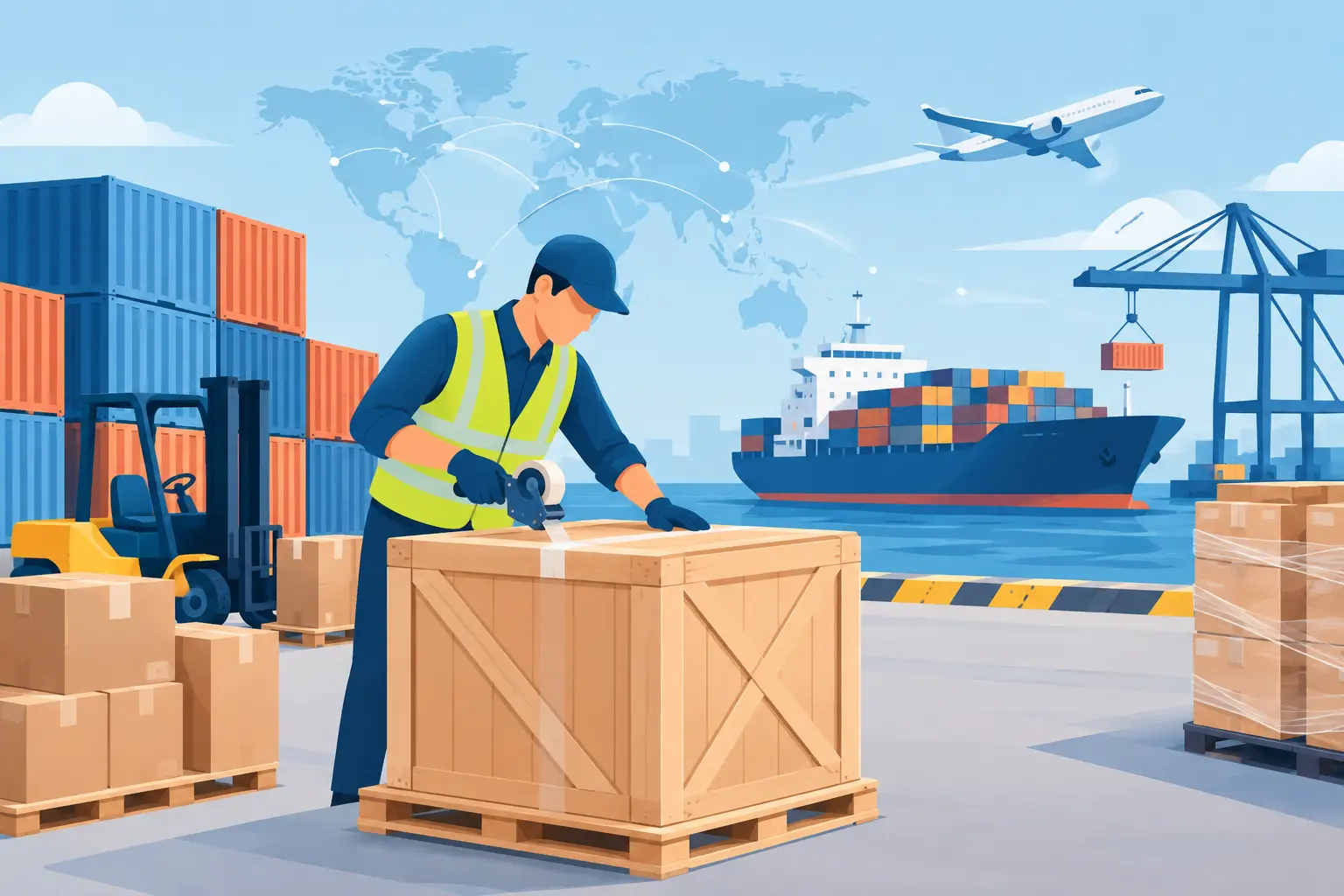
Export Packing: The Discipline Behind Safe Trade

Export Packing: The Discipline Behind Safe Trade

A consignment can be well made, competitively priced and urgently wanted by the customer, yet still fail because of export packing. The damage may not become visible until a crate is opened at the far end of a long sea journey. By then, the exporter has an unhappy buyer, an argument with insurers, a claim against a carrier and, often, little practical remedy. Packing is not the minor operation that follows the important work. It is part of the sale.

Those who have worked in export know that a product’s journey rarely resembles its journey from factory to local customer. It may be lifted several times, held in a humid port, travelled by road on poor surfaces, spent weeks in a container and encountered a climate very different from that of its place of manufacture. The package must withstand all this without relying on goodwill or careful handling.

Read more